When the Product Grows but the Token Doesn’t


Table of Contents
Most projects launch tokens without connecting them to the real economics of their product. The pattern is almost always the same: a short spike after listing, a sharp drop, then years of flatlined price action with no recovery.
That’s why the market has started asking for something deeper than hype or marketing support. It’s asking for tokenomics audits – systematic reviews that uncover structural flaws before a token loses its value.
At 8Blocks, we’ve spent years dissecting token models to understand why they break and what makes them sustainable. Here’s what causes tokens to fail. And what makes them last.
How the market learned to pay for verification
In the early days of the industry, teams rushed to launch smart contracts. Development moved fast, and security reviews were rare. The result was predictable.
Contracts were hacked, tokens were stolen, exchanges paused withdrawals after attacks, users lost money. It happened so often that it stopped feeling like an exception. It felt like the market.
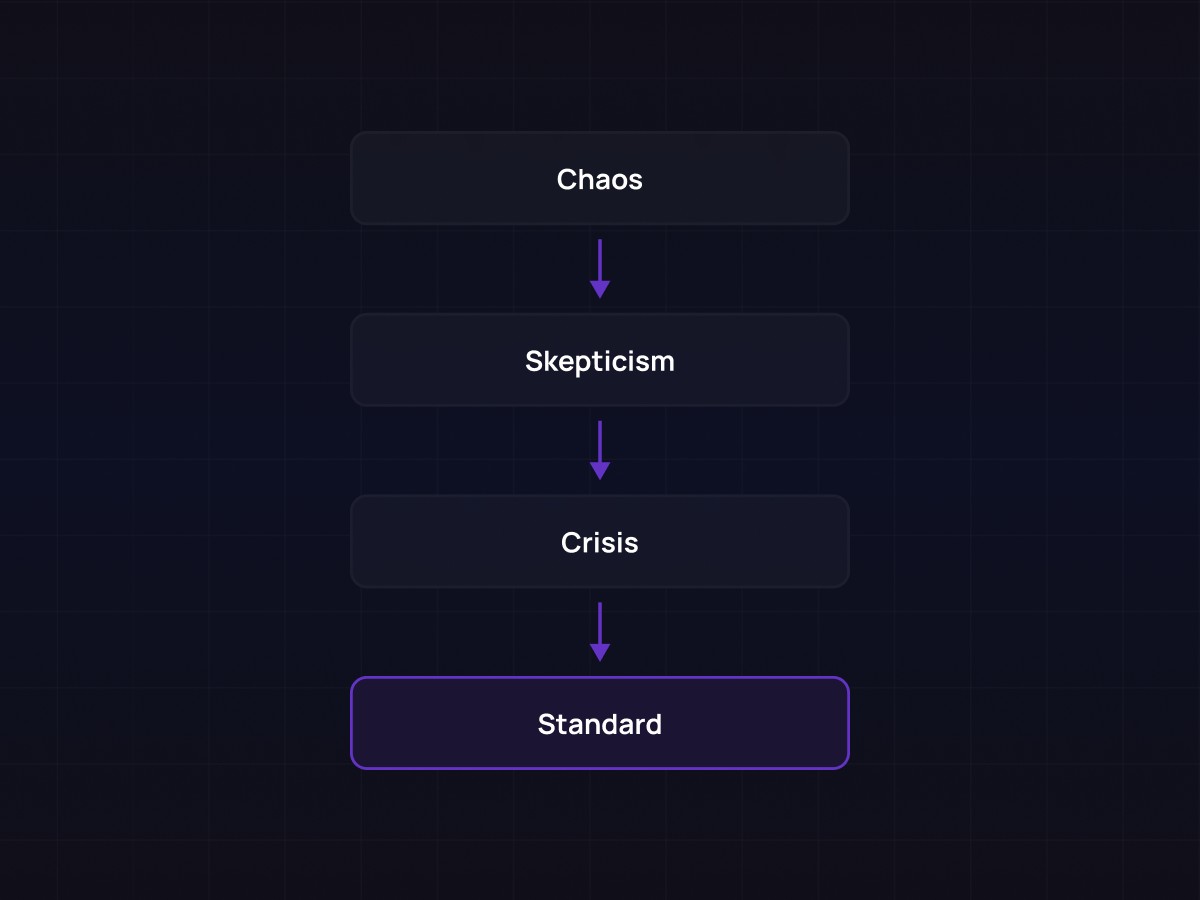
Against that backdrop, one smart contract development firm introduced a new service: audits. The market wasn’t impressed. At the time, audits felt excessive. Almost ceremonial. No one wanted to pay for them, and auditors looked like people inventing problems to justify their work.
But four to five years later, the perception flipped. Audits became a requirement for token listings. Exchanges stopped reviewing projects without independent security verification because a contract exploit was no longer seen as a project-level risk. It was a platform-level threat.
By then, smart contract audits had become more expensive than development itself. And no serious project could go to market without one. What started as an optional check became an industry standard.
Half of all tokens don’t make it to year four or five
Most tokens follow the same trajectory. A brief surge after listing, a sharp drop, then years of stagnation with no real recovery. The pattern is so consistent it’s almost predictable.
By some estimates, more than 50% of all cryptocurrencies launched since 2021 are already dead. They’ve stopped trading and are now considered failed projects. The majority of those collapses happened in 2024 and 2025.
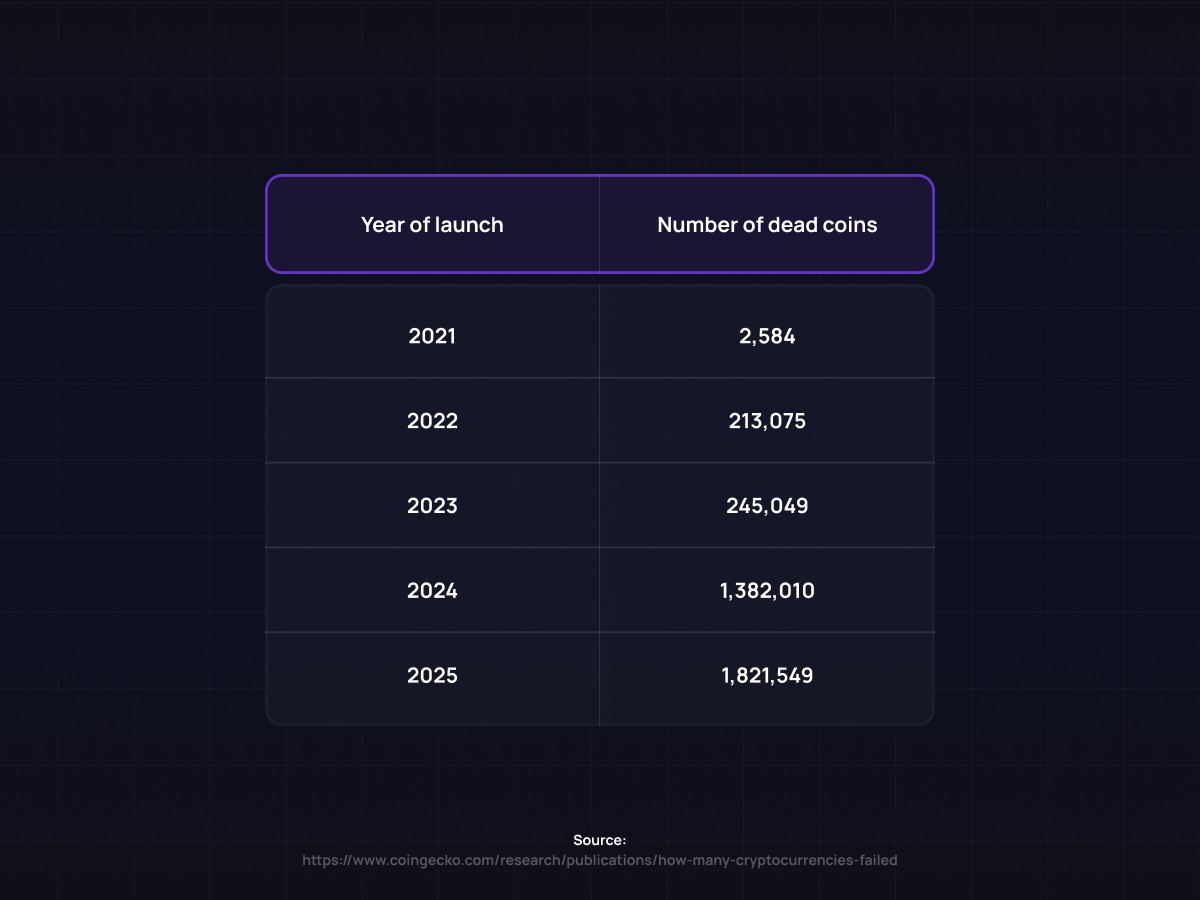
At the same time, a drop in token value is rarely a sign that the project itself is weak or unwanted. Many of these products continue to grow their audience and develop steadily.
Product growth ≠ token growth
A product can evolve, its audience can expand, transaction volume can increase. Yet the token price may remain at its lows for years.
This situation feels illogical if you compare a token to a stock: in traditional markets, company growth and valuation are closely linked. In crypto products, that connection is often missing.
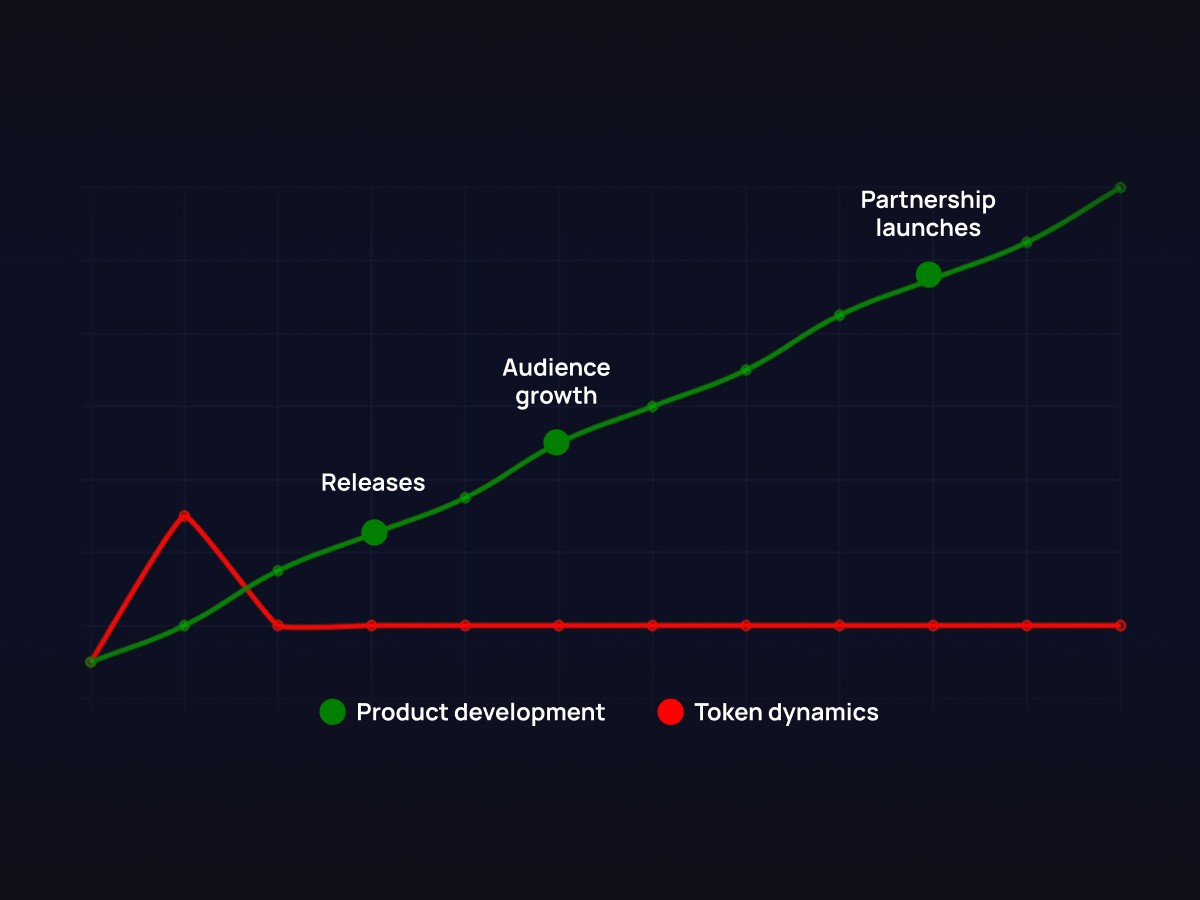
The reason lies in the token’s architecture. If it isn’t embedded in product use cases, doesn’t participate in the internal economy, and isn’t actively used by users, demand for it gradually disappears. It offers no additional utility or advantage and slowly falls out of the system, remaining at best a speculative trading asset.
Even if short-term growth appears in the first months due to news, hype, or a listing event, it is inevitably followed by a decline. From there, the token moves along a downward trajectory.
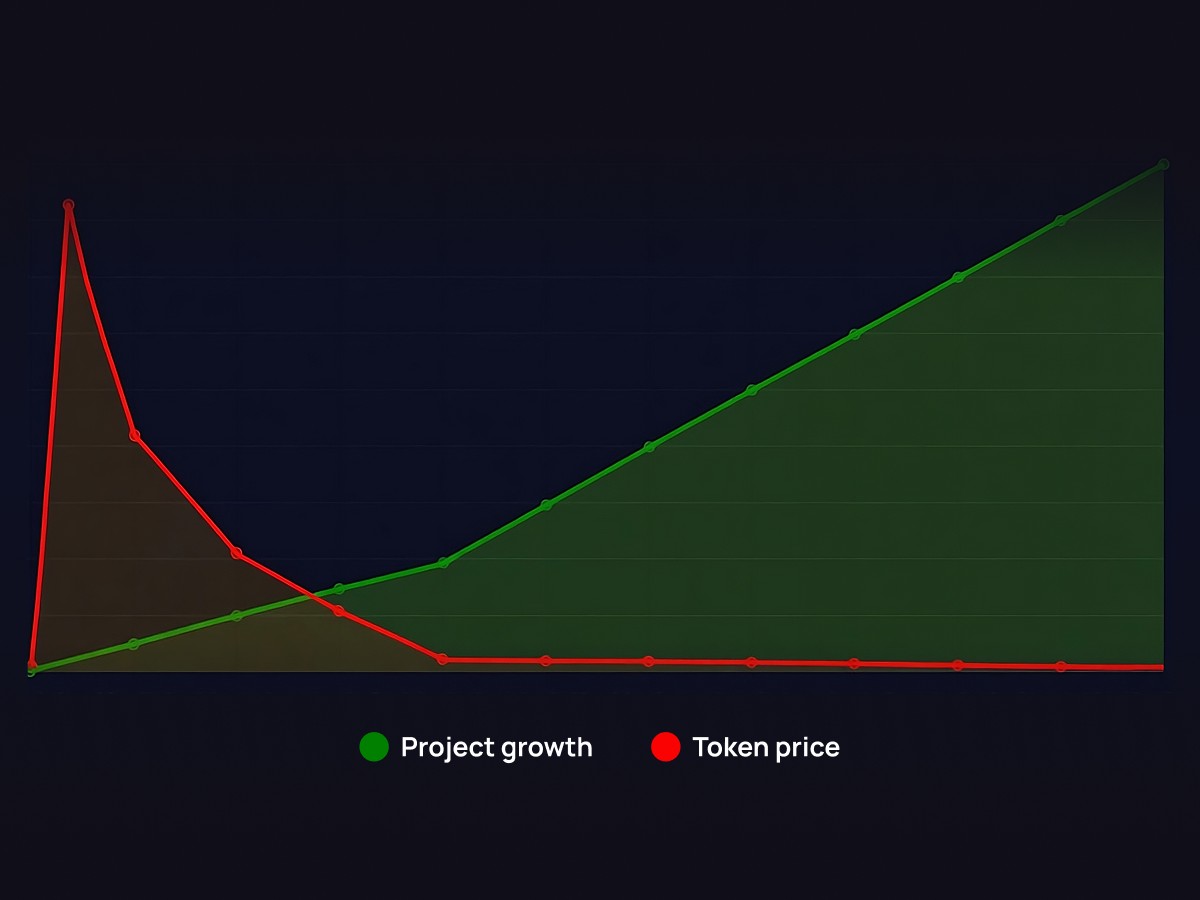
In the next cycle, the market recovers, but the token barely reacts. During bearish periods, when prices decline for extended stretches, it loses even more value. And with each new cycle, the token sets fresh lows.
Breaking tokens down to the atomic level: how we started auditing models publicly
We began conducting open tokenomics audits to show how most project models are actually structured. Over time, we saw just how deep the systemic issues ran.
We would select an interesting token and dissect its model step by step. We analyzed the economics, price charts, product integration, the history of changes, the impact of news, and user behavior. Then we approached the team, presented the findings, and, with their approval, published the audit openly.
These reports spread quickly across the industry. Projects began to recognize recurring patterns: tokens weren’t being used, incentives were poorly designed, and only a few mechanisms worked. Soon after, requests for full private audits started coming in.
When to review and rebuild your tokenomics
The first case is early stage. The token hasn’t launched yet, but the white paper is ready, distribution is defined, and the initial usage logic is in place. At this stage, it’s hard for the team to judge whether the model is truly viable or if it can survive real market pressure.
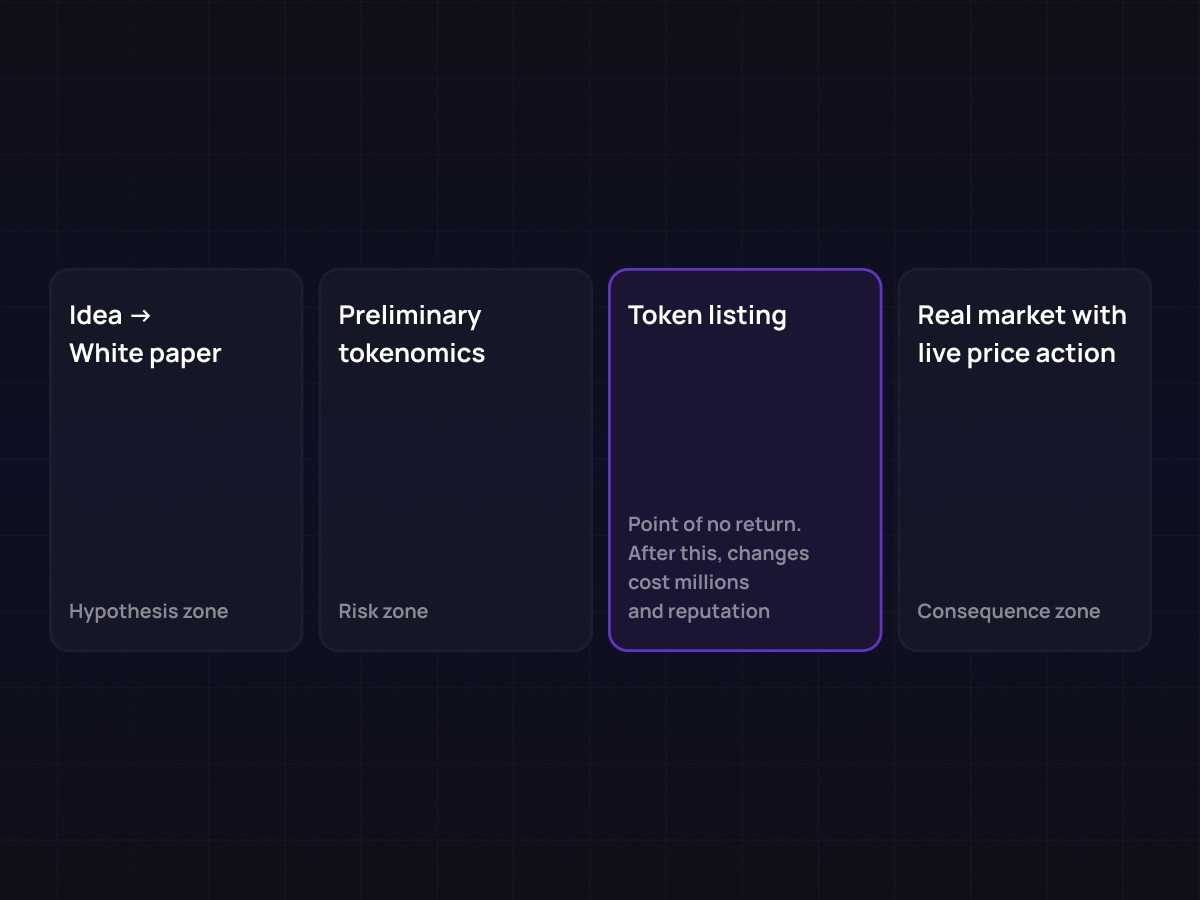
Mistakes made here don’t show up immediately. They surface after listing, when changing the foundation is costly and complicated. That’s why an early audit matters. It helps validate the calculations, the demand mechanics, and the link between token and product before the token goes live.
The second case is when the token has been on the market for several years. The product continues to grow, but the token doesn’t. We’ve already described this pattern above.
The third case involves large ecosystems with multiple services under one brand. In these projects, the token often exists only formally. It’s there, but it barely participates in the internal economy. Users actively engage with the products, yet they don’t use the token.
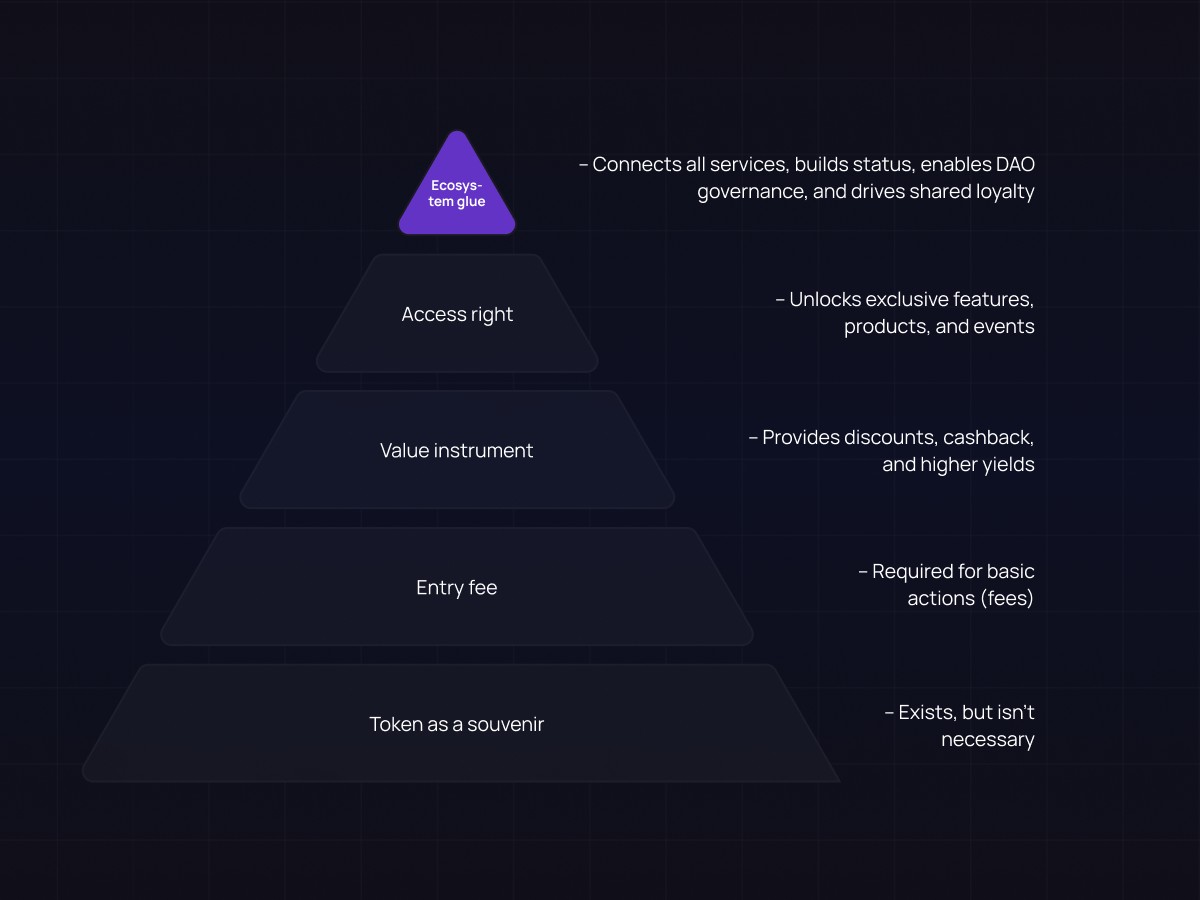
In these cases, the audit becomes a matter of rebuilding connections. The token has to function as a tool for access, status, participation, or tangible benefits rather than simply existing on paper.
The key is to embed the token into real product scenarios so that using it becomes a natural part of interacting with the ecosystem.
Why exchanges, funds, and market makers need an audit
An audit isn’t just important for the project itself.
For exchanges, a token is not only an asset. It’s also a reputational risk. If a token loses value rapidly after listing, it damages user trust and affects the platform’s credibility. An audit helps assess the model’s long-term resilience and understand how the token is likely to behave once it enters the market.
Investment funds face a different challenge. They may thoroughly understand the product, the team, and the business model, yet tokenomics often remains a black box. As a result, a fund can invest in a strong project but acquire tokens that were never structurally positioned for growth. An audit reveals that disconnect before capital is deployed.
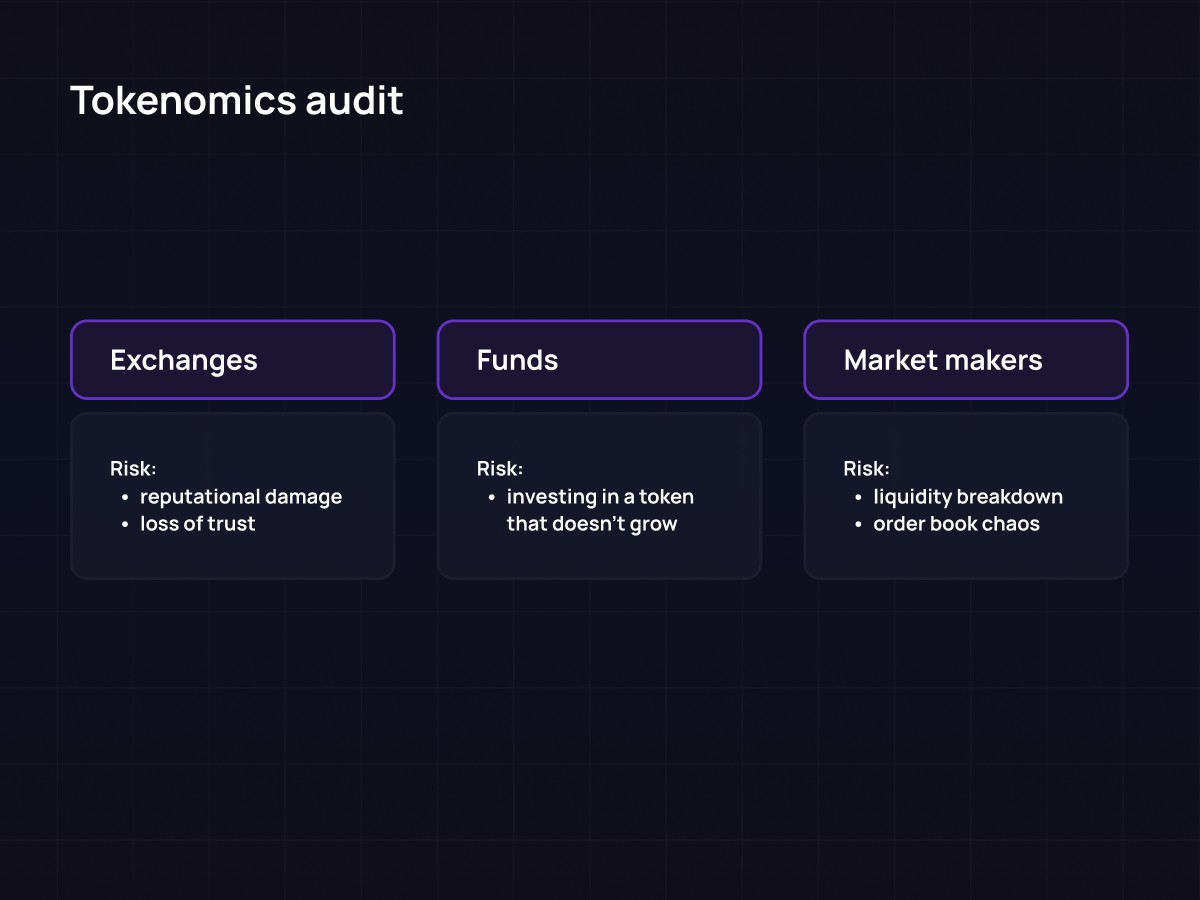
For market makers, reviewing the model is a way to determine whether the tokenomics can sustainably support liquidity and manage price pressure. The stronger the model, the more stable the market becomes and the less manual intervention is required.
The audit process: from documentation to market dynamics
If the token hasn’t entered the market yet, the work begins with the documentation. We review distribution, incentive design, and demand mechanics. The goal is to understand what the user gains from holding the token, what the company gains from issuing it, and how those interests connect. An audit at this stage usually takes between one week and ten days.
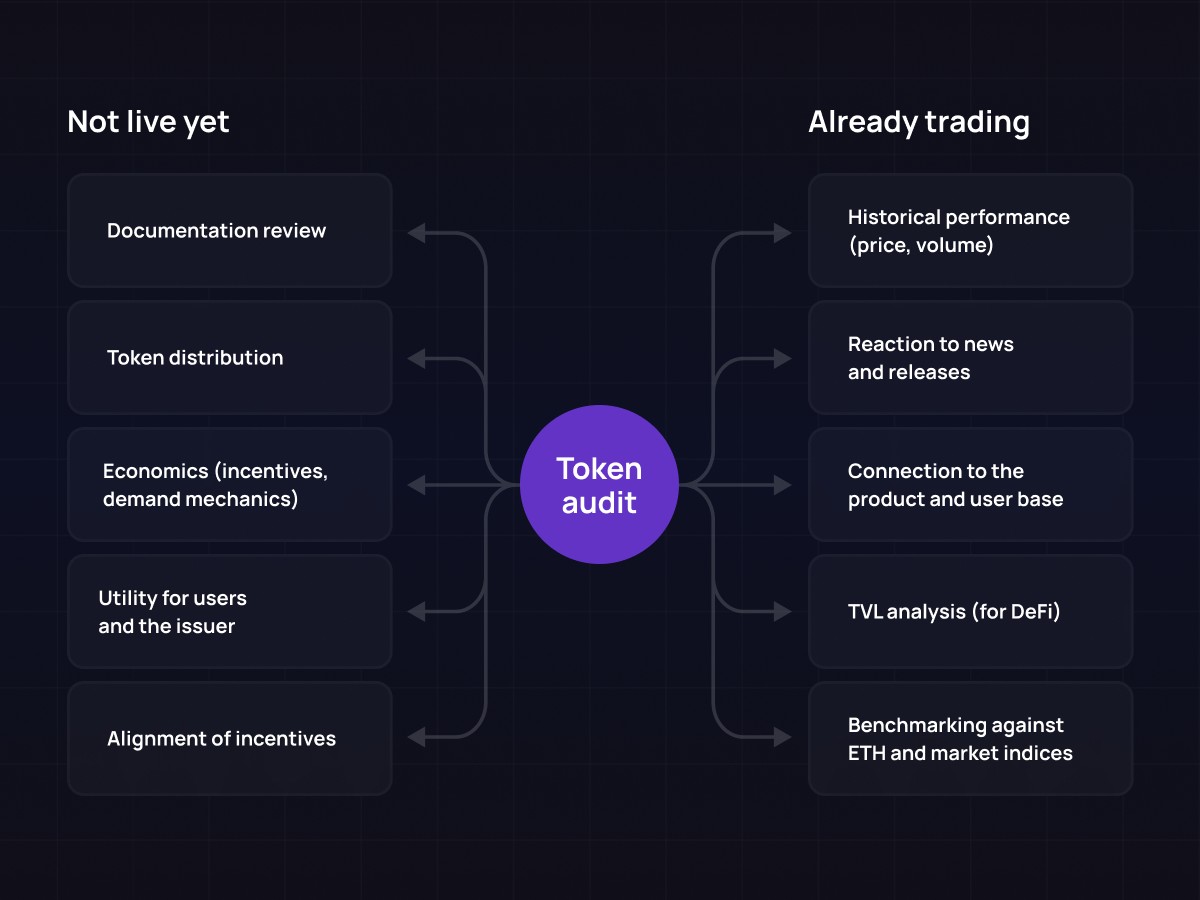
If the token is already trading, the analysis goes deeper. We examine the full historical performance: price, trading volume, correlation with news cycles, and reaction to product releases. We look at how the token responds to new launches, what happens to the user base, and how key metrics evolve. For decentralized services, we analyze TVL separately.
Next, we compare the token’s behavior to ETH and broader market indices. At this stage, it often becomes clear that the token price follows its own path and has little connection to the company’s product logic.
Examples of strong and weak models
A good example of a mature economic model is Binance. Their token is integrated across multiple layers of the ecosystem: it is embedded in the fee structure, provides access to the launchpad, and functions as a payment tool across several services.
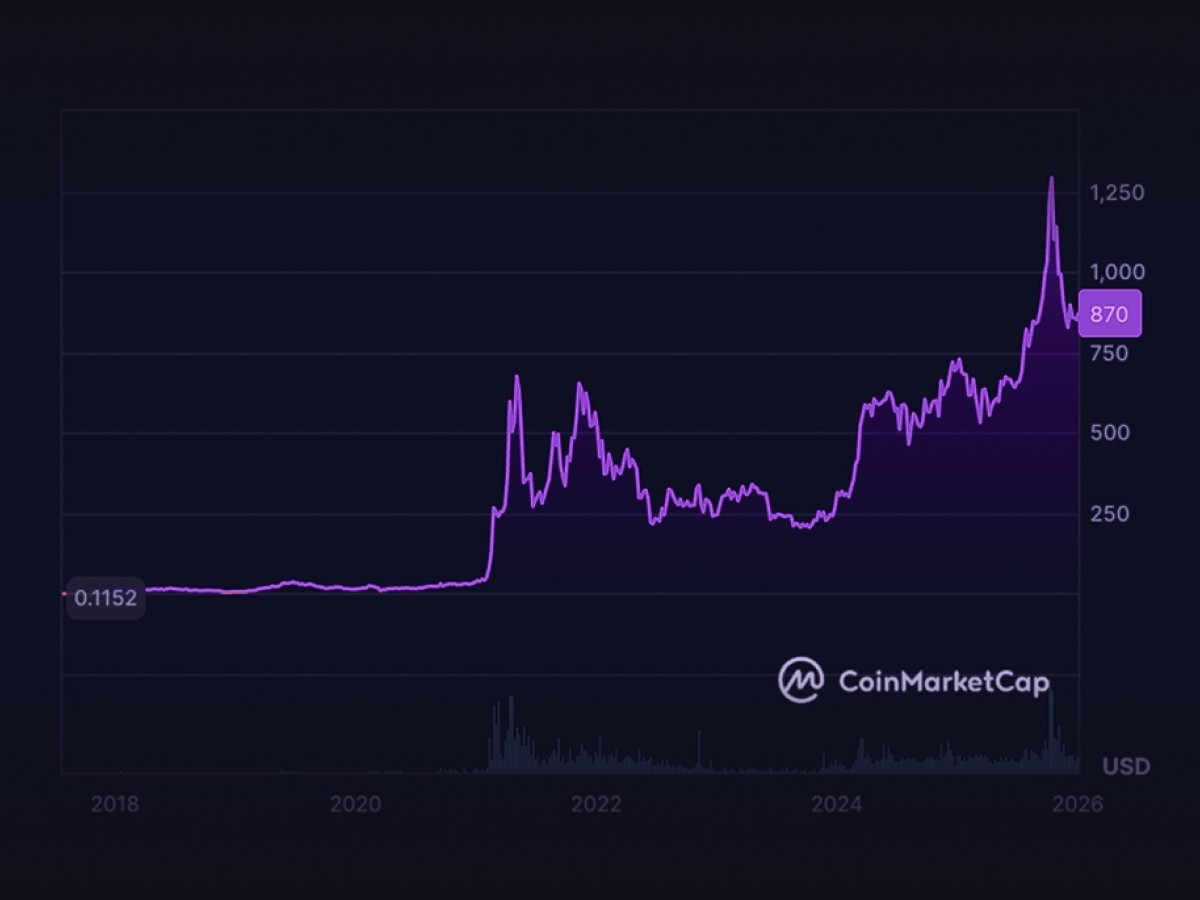
This structure allowed BNB to develop a long-term upward trajectory. There have been fluctuations, but the broader trend has remained intact.
Hyperliquid follows a similar approach. The HYPE token is integrated into core product mechanics, from network security to fee payments and governance voting. That integration creates organic demand.
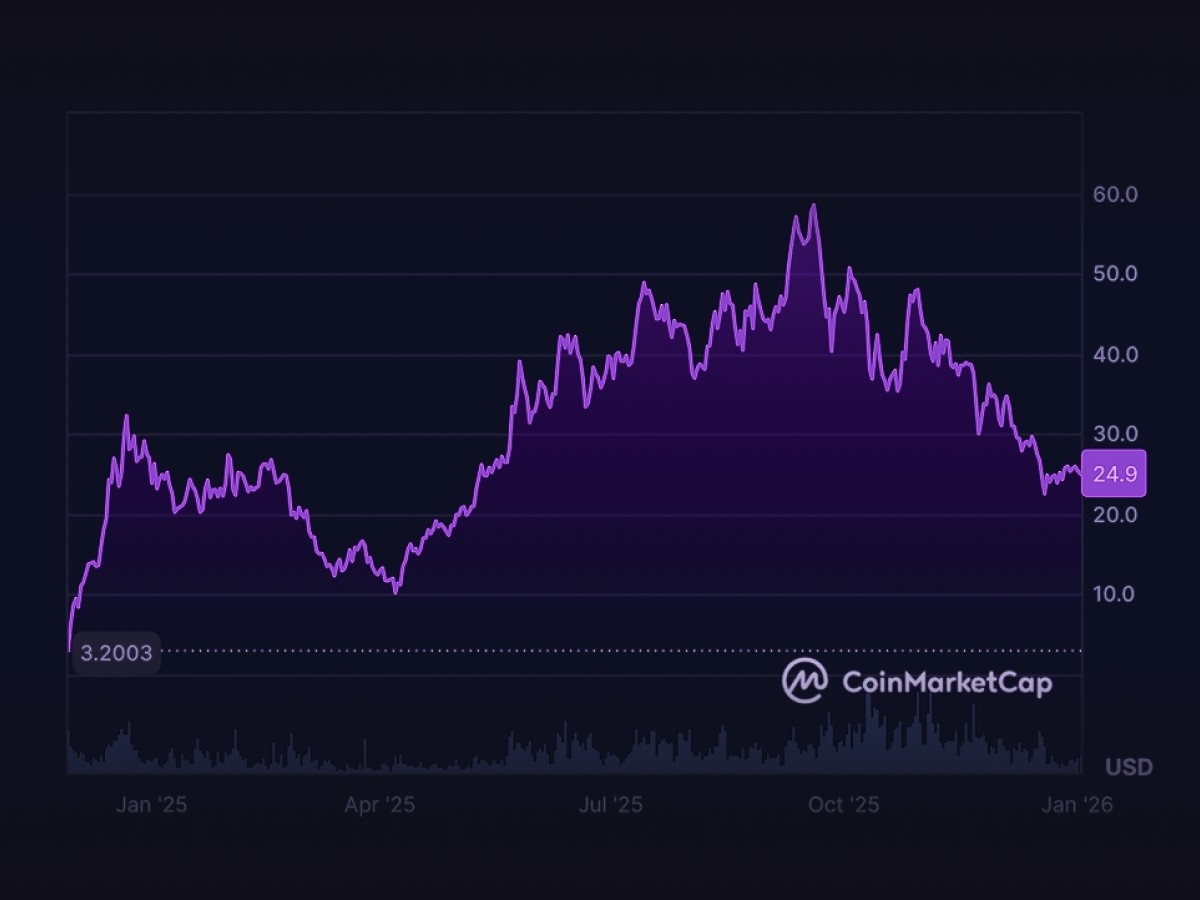
In contrast, there are crypto banks with dozens of products and hundreds of thousands of users where the token is effectively unnecessary. Take Choise.com and its CHO token. It may offer minor discounts on occasional transactions, but most users can easily do without it.
In models like this, the token lacks real demand. Its value is sustained primarily by news and expectations rather than actual usage.
Tokenomics audits aren’t about finding a mistake in a formula. They are about restoring meaning to the idea of a token and redefining its role inside the product economy.
At 8Blocks, we see the future of Web3 not in speculation, but in working models where the token creates real value and supports product growth. When the economy is structured correctly, the token stops being a risk and starts functioning as an asset.
If you want to understand how your tokenomics should behave, where the weak points are, and how to make the token actually work, reach out to us on Telegram. We’ll help you analyze the model, test your assumptions, rebuild the economic structure, and move the project to the next level.

Share