Why Tokens Drop After TGE Even When Everything Goes to Plan


Table of Contents
This is a familiar story in crypto.
A project makes it to TGE looking polished. The team has spent months preparing the launch, running rounds, building the community, and lining up the listing. Then the token hits the market and almost immediately starts sliding. And that’s when the usual crypto reaction kicks in: confusion.
How is that possible? Why is everyone selling? Who is dumping below market? Shouldn’t people be celebrating the listing and holding? Not necessarily.
Because the TGE price isn’t the starting point for everyone. For many participants, it stopped being a starting point long before launch. It’s simply a convenient exit. And once you stop looking at the polished public version of the story and start looking at how the project sold tokens before listing, the whole picture starts to make sense.
In this article, we’ll break down why a token can start dropping right after TGE, where that price pressure comes from, and how the way you structure rounds before listing can change the outcome entirely.
TGE doesn’t start the market. It just makes the problem visible
One of the most common mistakes is treating TGE as the token’s first real price. But by the time a project reaches the public round, it has usually already gone through a full chain of earlier sales. And each round comes with its own terms:
its own entry price
its own allocation size
its own TGE unlock
its own vesting
its own lockup
And the earlier the round, the lower the entry price usually is. That means some early investors can sell below market and still make money. For them, that isn’t a loss. It’s just a normal profit-taking event. That is also why the question, “Why would they sell below what others paid?” is often aimed at the wrong people.
Early investors entered at prices nowhere close to what the market sees at TGE.
Why a token starts dropping right after listing
The problem usually isn’t the listing itself, and it isn’t that the market suddenly “stopped believing” in the project. More often, it comes down to how many tokens enter circulation on TGE day and at what price those tokens were originally bought. Here’s what that can look like in a simple example:
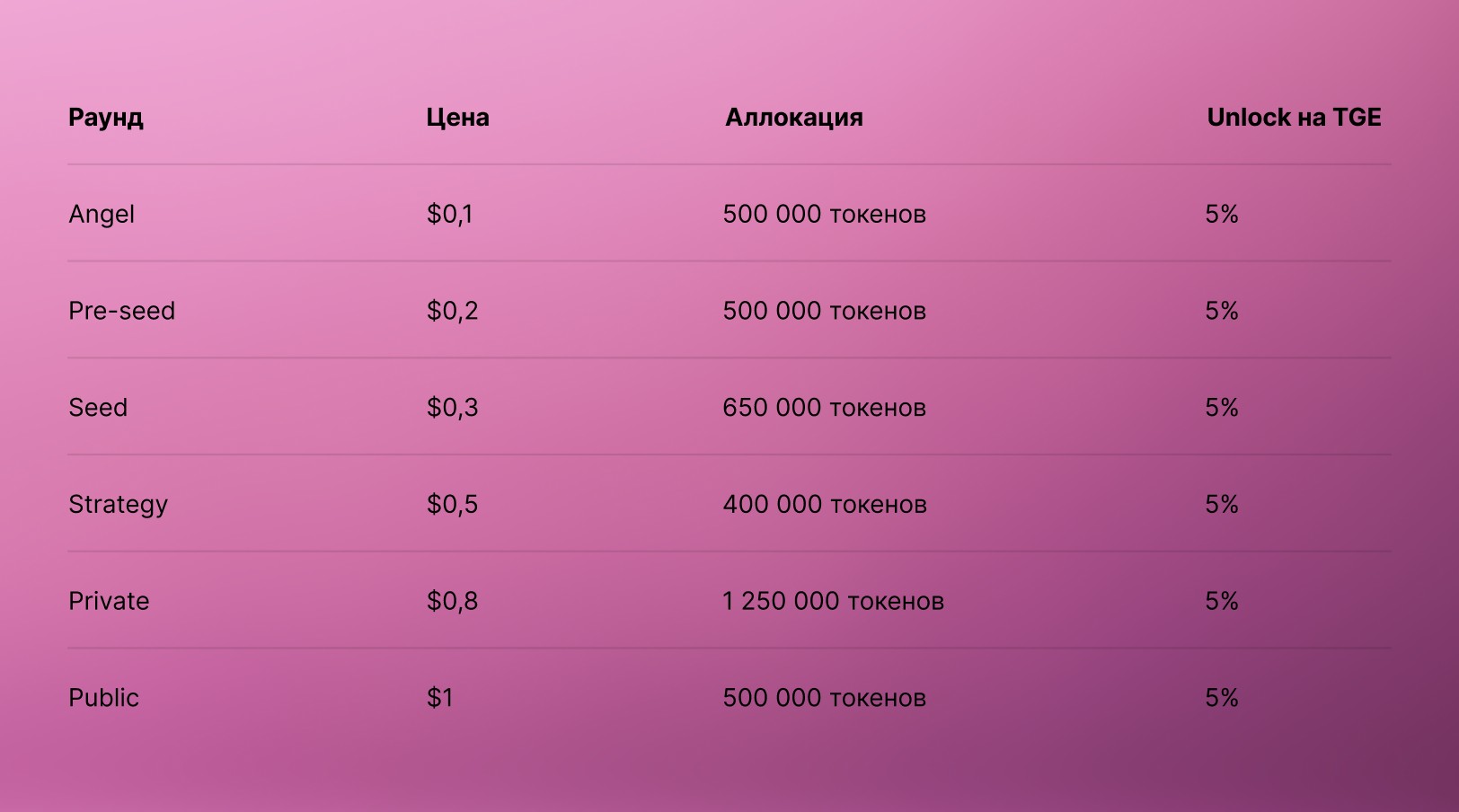
If you look only at the early rounds unlocking on TGE day, the market is already facing sell pressure from 165,000 tokens at an average entry price of around $0.46. Now add the airdrop, marketing allocations, and other tokens that also enter circulation on listing day.
And that’s where the math kicks in. Supply starts outpacing what the market is willing to absorb. Not because everyone suddenly lost faith in the project, but because too many cheap tokens are hitting the market at the same time.
The result is usually the same: the price starts sliding.
Often, the real problem isn’t TGE itself
From the outside, it almost always plays out the same way. Some people say the market is weak. Others blame marketing. Some claim the community “wasn’t strong enough,” while others act like this was all part of the plan. But in many cases, the issue has very little to do with the listing itself.
The real problem starts earlier. The project has already built a sale structure that sends too much cheap supply into the market on TGE day.
If early investors get liquidity right after listing and have no reason to hold, they will sell. That is perfectly rational behavior. And at that point, no “strong narrative” is going to save the price, because the pressure is coming from unlocks.

How to sell tokens the right way before TGE
This is where things get interesting. Every round before TGE happens through OTC, meaning over the counter deals. And that gives the project room to maneuver before the listing happens. Strong fundraising means closing a round without setting up a sell-off on TGE. It means making sure early investors don’t get to listing already looking for the fastest way out.
Put simply, early investors shouldn’t see the listing as their first real chance to cash out.
If they come into TGE with that mindset, price pressure is almost guaranteed. If they don’t, the token has a much better chance of holding up once it hits the market.
How early investors can exit before listing
This is the point where people often start thinking too literally. As if there are only two options: either keep everyone locked in until TGE or let everyone out early. But there is a lot more flexibility than that.
Angel investors can be partially exited before the token ever reaches the market. Their tokens can be sold off gradually before the public round. Other early investors can also be taken out in part, so that by the time listing happens, they’re already sitting on cash instead of feeling pressure to rush into the order book and lock in profits.
That is the room to maneuver a project has before TGE. The fewer cheap tokens early investors are still holding by the time listing arrives, the less price pressure the token faces on day one. It’s not the most romantic part of token strategy. But it works.
Why a partial exit can be better than an unlock at TGE
Let’s say an angel investor came in at $0.1 per token and got 500,000 tokens. Now imagine that before TGE, they sell just 10% of their position during the Pre-seed round at $0.2. What does that give them?
they’ve already made their money back
the total value of the position has gone up
the remaining 450,000 tokens now effectively sit at around $0.09
For that investor, this can often be a better outcome than waiting for a 5% unlock at TGE and selling after listing, when the market’s already choking on excess supply. That’s why a partial exit before listing can be the more rational option for both the investor and the project. In one case, you get to TGE with a cleaner structure. In the other, you get the usual crypto ritual: price pressure from day one.
What projects need to understand early
Closing early rounds fast isn’t the goal. What really matters is the shape the project’s in by the time it reaches listing. If the team hasn’t thought through how early investors will exit, TGE can turn into a sell-off day for the cheapest allocations very quickly. And then the market sees a pretty familiar picture: too many tokens, too many people looking to lock in profits, and not enough buyers willing to absorb the volume.
That’s why demand is only part of the job. Supply matters too, so does marketing. So does round structure. And so does everything the project did before TGE.

Why this isn’t about a “bad market”
In many cases, a token doesn’t fall after TGE because the market “stopped believing” in the project. And it doesn’t always mean the team did a poor job on marketing either.
Sometimes the reason is much simpler and much less exciting. Too much cheap supply hits the market, and there just isn’t enough demand to absorb it properly. That’s exactly why sale structure and OTC execution before listing often have more impact on price than the listing itself. Because TGE doesn’t create the problem from scratch. It simply reveals what the project already allowed to build up before listing.
Share