GromaCoin Audit: A Real REIT in a Weak Wrapper
GromaCoin ($GRO) sits on a REIT that files with the SEC and owns Boston apartments, yet the token scored 29 out of 100, grade D. The asset isn't the problem: three versions of the numbers, a manager-set NAV, and a plain ERC-20 where the whitepaper promised ERC-3643.
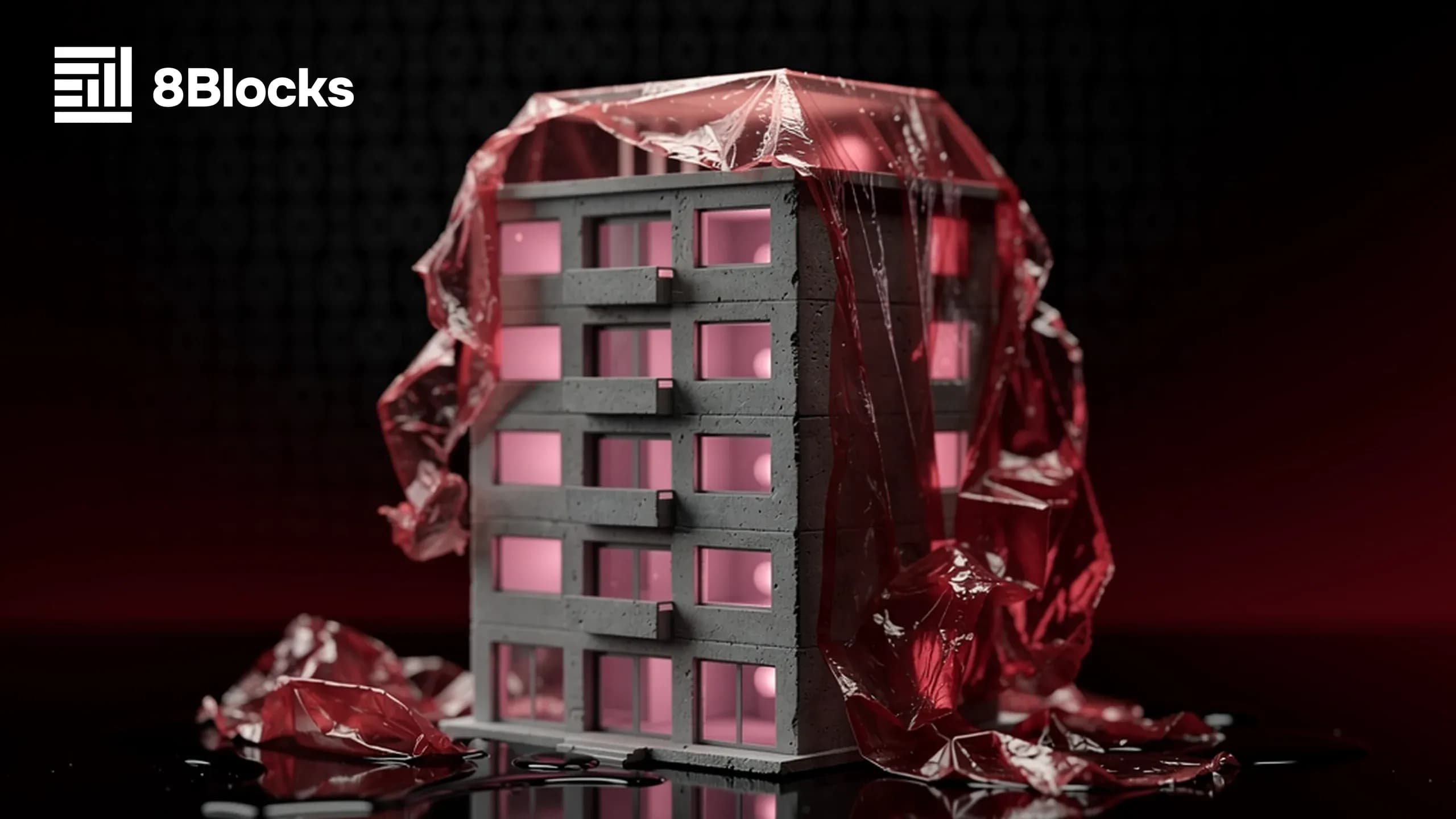
Real buildings don't make a reliable token.
GromaCoin ($GRO) sits on top of a REIT that has filed with the SEC since 2021 and owns income-producing apartments in Boston. Our audit still scored it 29 out of 100, grade D, one point below C.
The asset isn't the problem. The packaging is. The issuer's own disclosures contradict each other, the manager sets the NAV, and the token contract doesn't do what the whitepaper promises.
| Audit at a glance | Value |
|---|---|
| Score | 29/100, grade D, verdict: risky |
| Strongest point | a verifiable SEC issuer with a named fund administrator, transfer agent and paying agent |
| Weakest point | three versions of assets, supply and fees, plus a NAV no independent party signs off on |
| Data as of | October 6-7, 2026, public sources only |
What GRO actually is
GromaCoin is a token on Base. Each GRO is presented as a share in a REIT that owns small multifamily buildings, mostly in Boston, plus a small sleeve of real estate ETFs (VNQ and XLRE). Holders earn quarterly dividends and NAV appreciation.
The issuer reports $92,3m in assets and a NAV of $1,07 per token. The current dividend yield is 3,74%. Redemptions run quarterly at NAV with no fee, capped at 7,5% of NAV per quarter.
The issuer is real, and that's rare in RWA
Most tokenized assets we review can't prove there's a legal entity behind the token. GRO can. The SEC Form D for Groma NAV REIT, Inc. shows a Rule 506(c) offering open since November 2021, $56,2m sold to 115 accredited investors, and a registered broker-dealer on the deal.
The service stack is named too: Apex as fund administrator, Colonial Stock Transfer as transfer agent, JPMorgan Chase as paying agent. That's why the legal block scored 8 out of 20, above what we usually see. It's also why the low total is worth explaining.
Three versions of the same numbers
An investor needs one number to anchor on. GRO gives three.
| Metric | Source A | Source B |
|---|---|---|
| Assets | $92,3m (rwa.xyz) | $137m "ecosystem value" (groma.com), above $119m (Modern Treasury) |
| Token supply | 86,26m GRO (rwa.xyz) | 65,6m GRO (Basescan) |
| Minimum entry | 1 000 USDC (rwa.xyz) | $50 000 (SEC Form D) |
| Who can invest | Aim: access without accreditation (whitepaper) | Accredited only (SEC Form D) |
| Properties | 125 (groma.com) | 150+ (same page) |
| Units | 1 000+ (groma.com) | 700+ (same page) |
At NAV $1,07, the two supply figures imply $92,3m or $70,2m. The gap is $22m, and nothing on the public record explains it. Each discrepancy may have an innocent cause, such as a renamed entity, a stale snapshot, or a different reporting date. Together they mean an outsider can't reconcile what the token holds.
Fees decide the return, not the buildings
The fee disclosure moved. The same rwa.xyz card once showed a 0% management and 0% performance fee. Today it shows 1% and 12,5%. Subscriptions are listed at 0%, while the Form D allows up to $32,55m of underwriting compensation on $500m sold, roughly 6,5% upfront.
Here's what that does to $100 000 in year one, assuming a 9% gross return, the midpoint of the issuer's 8-10% target:
| Year 1 on $100 000 | 1% + 12,5% | Same + 6,5% load | 0% / 0% |
|---|---|---|---|
| Gross return | $9 000 | $8 415 | $9 000 |
| Management fee | $1 000 | $935 | $0 |
| Performance fee | $1 000 | $935 | $0 |
| Net return | 7,0% | 0,04% | 9,0% |
Same buildings, same year, and the net result ranges from 9% to almost nothing. That's why we treated the mismatch as a red flag and applied a 5-point penalty, not as a typo. Property-level fees are a second blind spot. Groma also manages the buildings, and those fees aren't disclosed.
The NAV checks itself
Investors enter and exit at NAV, so NAV is the price. According to the whitepaper, the manager values the properties each quarter, a third-party appraiser runs "fact checks", and an outside auditor reviews the books once a year. Neither the appraiser nor the auditor is named. No audited statements are public.
The return figures don't add up either. The site shows 7,03% annualized total return, 5,56% from appreciation and a 3,74% dividend yield. 5,56% plus 3,74% is 9,30%. The periods may differ, but the page doesn't say so.
A manager that earns fees on NAV and also sets NAV needs an independent check. Without one, our template caps the grade at C regardless of the total.
The contract isn't the one in the whitepaper
The whitepaper says GRO is an ERC-3643 token, a standard built for securities with identity checks and transfer whitelists. The verified code on Base is a standard OpenZeppelin ERC-20 with mint, pause and UUPS upgrade functions. It has no identity registry, no whitelist, no forced transfer and no freeze.
- Anyone holding GRO in a self-custody wallet can send it to any address. Reg D resale limits depend on Groma's custody, not on code.
- At deployment, all four roles (admin, minter, pauser, upgrader) went to one externally owned wallet. A role grant followed in February 2026, and the current holders aren't public.
- No code audit is published, and there's no multisig or timelock on record.
- 99,57% of on-chain supply sits on one address, most likely Groma's omnibus wallet. The 541 holders mostly don't hold their own keys.
The block carries only 5 points of weight. It's also the cheapest one to fix.
Exit works in calm markets
Redemptions at NAV with no fee are a strength. The cap is 7,5% of NAV per quarter, about $6,9m at current assets. If a quarter of the capital wanted out at once, the queue would stretch past three quarters. There's no secondary market to absorb sellers. No DEX pools, no market price, $0 in DeFi. GRO behaves like a closed real estate fund, not a liquid coin.
How the score adds up
| Block | Weight | Score | Risk |
|---|---|---|---|
| Legal nature | 20 | 8,0 | medium |
| Ownership chain | 15 | 5,0 | high |
| Regulation and access | 10 | 5,3 | medium |
| NAV and oracle | 15 | 4,2 | high |
| Fees | 10 | 2,0 | high |
| Liquidity and exit | 15 | 5,0 | medium |
| Smart contract | 5 | 0,8 | high |
| Underlying portfolio | 10 | 3,3 | medium |
| Total after -5 penalty | 100 | 28,7 | D |
What would move GRO from D to B
Most of the gap is disclosure, not economics. Five steps would take the score to roughly 55-65:
- Name the appraiser and the auditor, and publish audited statements.
- Publish one fee table, including the performance fee base, the hurdle and any upfront load.
- Reconcile on-chain supply with the transfer agent's register, and say how often that happens.
- Show the chain from REIT to buildings, including any purchases from Groma's parallel funds, and disclose leverage.
- Move roles to a multisig with a timelock, audit the contract, and add the whitelist the whitepaper promises.
The lesson for RWA issuers
Investors don't price the asset alone. They price how well they can verify it. A strong building behind an inconsistent token reads, from the outside, the same as a weak building. Before you tokenize, make sure the whitepaper, the token page, the regulatory filing and the code tell the same story. When they don't, the market fills the gap with a discount.
8Blocks runs tokenomics and RWA structure audits for teams before and after launch. If you're preparing a tokenized fund or REIT, talk to us before the first data aggregator lists your numbers.
Sources: rwa.xyz, groma.com, GromaCoin whitepaper, SEC Form D/A, Basescan, Modern Treasury. Data as of October 6-7, 2026.
This article is for information only. It is not investment, legal or tax advice and not an offer to buy or sell securities. Groma can request a re-assessment by providing documents on the open questions.
Issuing an RWA Token on a Structured Product in Singapore: A Checklist
MAS looks at economic substance, not labels: a token on a PE stake or a revenue share is a security or a CIS unit. Nine steps to clear before issuance — prospectus exemptions, accreditation thresholds and what the smart contract must enforce.
BCAP Passes the Compliance Test. Its $973m Price Doesn't
Aggregators list $973m in assets, yet three addresses moved the token in 30 days. Our audit of the first tokenized venture fund: grade C, 40 out of 100. The wrapper holds; the price inside it can't be checked.
Tokenized Revolut Scored 32 Out of 100. The Asset Wasn't the Problem.
RWA is the market's calm corner: real shares behind the token. Our CREV audit returned a C, 32 out of 100, while Revolut itself is profitable and growing. The risk sits in the wrapper.