
Tokenomics audit
We run a deep review of the current token model, identify weak spots, and provide practical recommendations on how to improve it
A finished token model can still fall apart
A polished document doesn't guarantee a model that can hold up, earn trust, or support the project as it grows
The model already has structural cracks
They may not be obvious at first, but sooner or later they start pulling the project in the wrong direction
Growth exposes the weak points
What looks fine in a static model often stops working once the product and ecosystem begin to scale
The logic doesn’t hold up in investor conversations
If the model is hard to explain, confidence drops fast
The problems surface too late
Usually at the point when they’re already slowing the project down
When an audit stops being optional
Most teams come in for an audit when the model is already built, but no one feels fully comfortable relying on it before a TGE, investor conversations, or the market itself
What we review in the model
We don't just look at the tokenomics itself. We look at the context it has to work in: the product, the business processes, the market, and the project's internal logic
The current token structure
We review supply, utility, vesting, pool allocation, and the economic relationships built into the model.
Calculations, forecasts, and scenarios
We revisit the formulas, assumptions, and key scenarios to spot mistakes and weak points.
How the model fits the project’s goals
We look at how well the tokenomics supports the product logic, the core metrics, and the business priorities right now.
The market and competing models
We compare the model against strong market benchmarks to see where it gives the project an edge and where it falls short.
Critical business processes
We work through the details with the CEO, CTO, CFO, and other process owners to uncover risks that don’t show up in the documents alone.
What becomes clear after the audit
You see where the current tokenomics is losing strength, clarity, and investor trust, and what needs to be corrected for the model to support growth instead of constant manual intervention
An audit often reveals a different problem than the one everyone was looking for
1. It looks like the model is already finished
In practice, the audit shows which parts of the tokenomics no longer match the project in its current form
2. It looks like the allocation is fine
The review shows where it starts creating unnecessary pressure on the token
3. It looks like the issue is just in the numbers
In reality, the weak spot is often in the token logic, its utility, or the way it connects to the product
4. It looks like the product just needs better marketing
In reality, the issue is often not external demand, but weak economics inside the model
5. It looks like investors simply didn’t understand the model
After the audit, it becomes clear where the tokenomics lost clarity and trust
6. It looks like the utility works
But once we test it, it turns out some of the mechanics create no real value and only make the structure more complicated
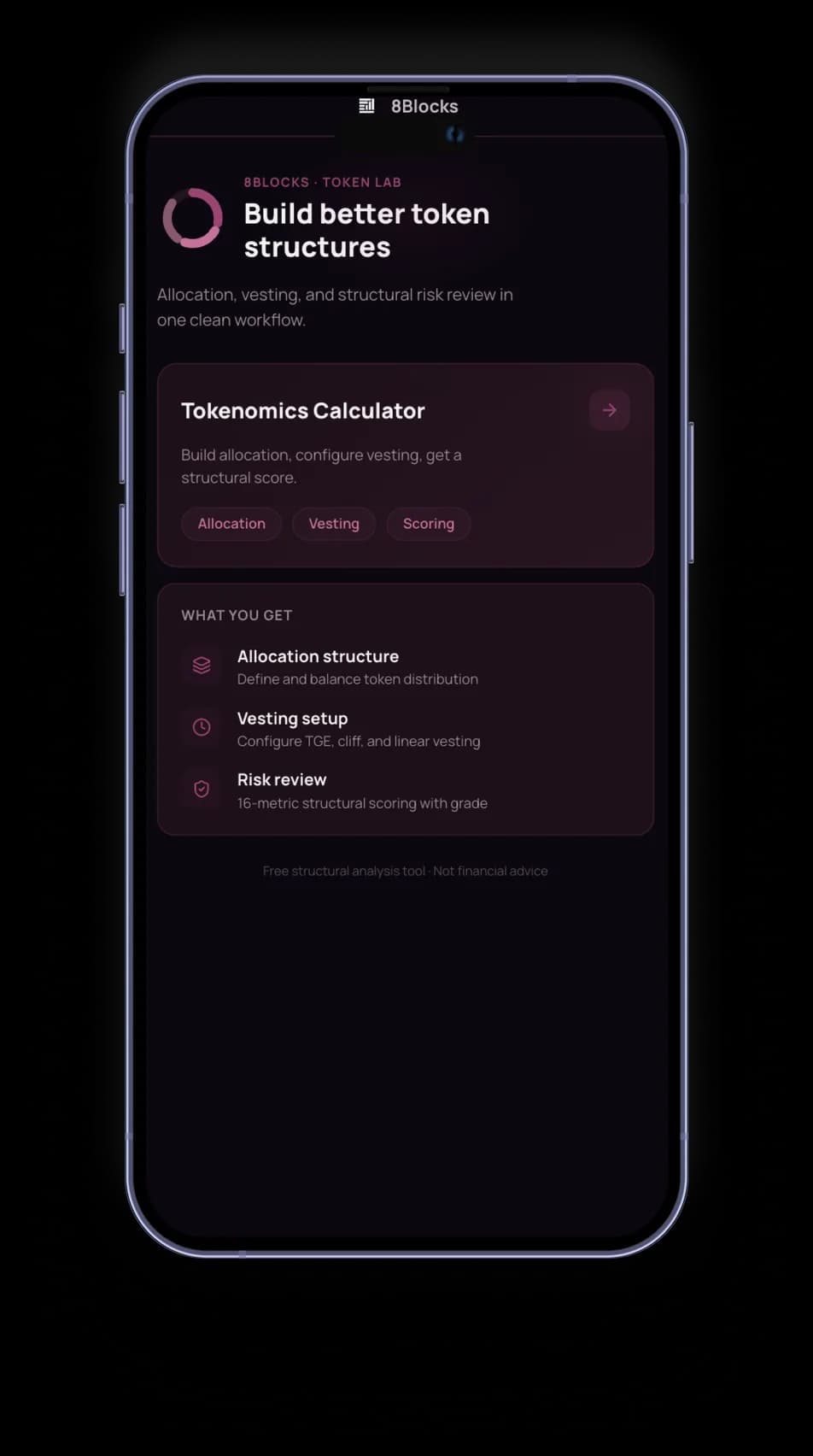
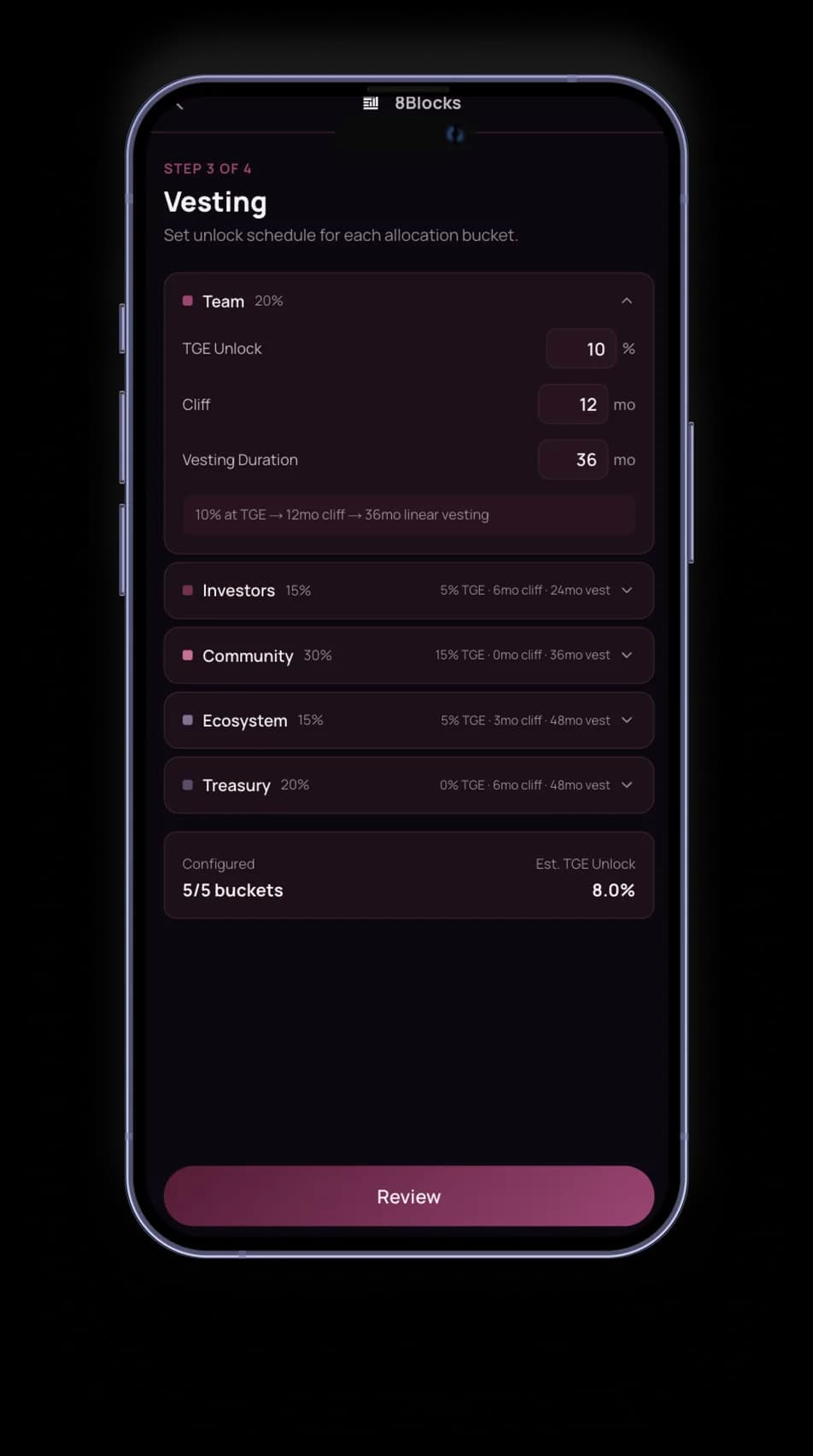
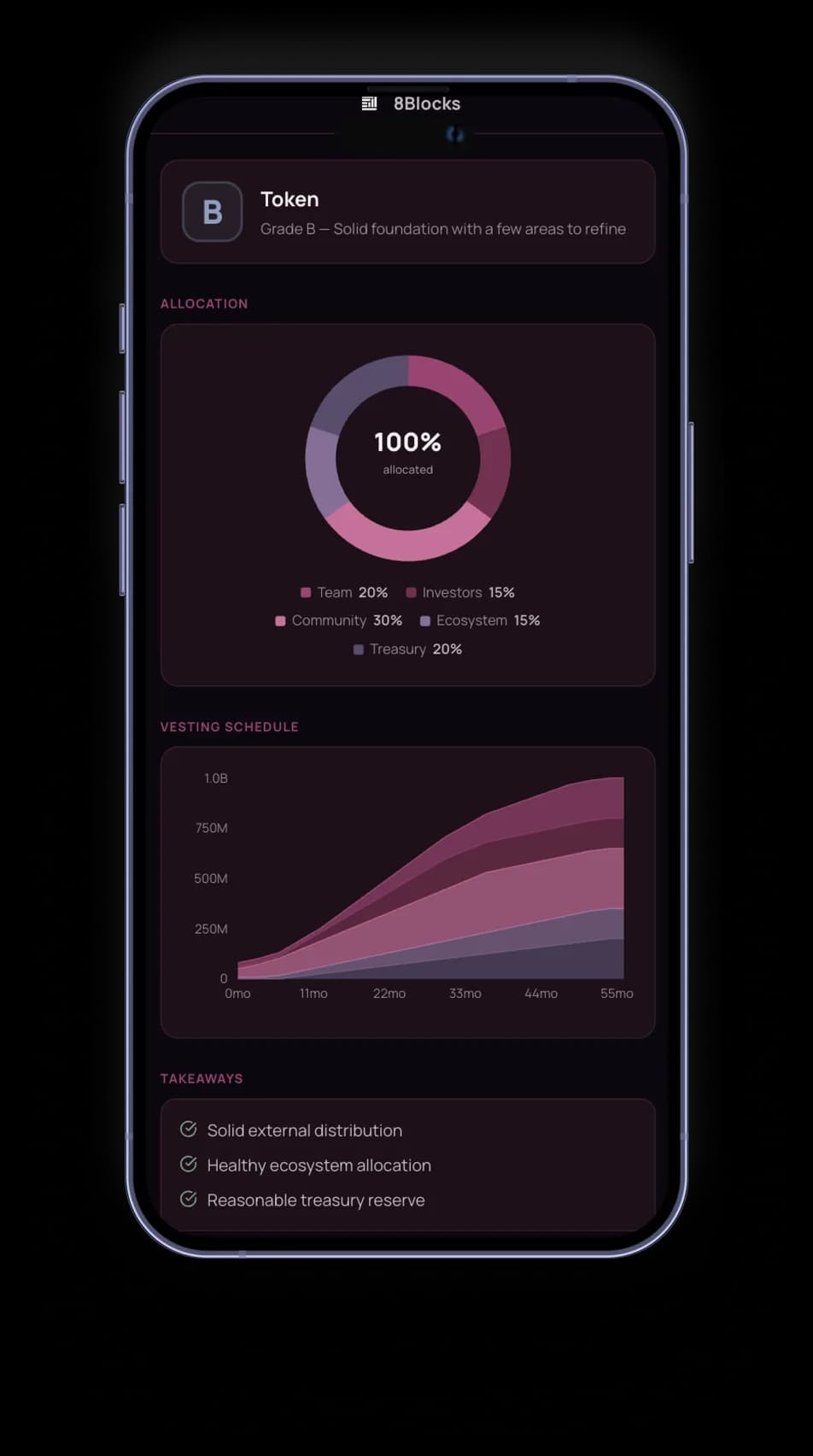
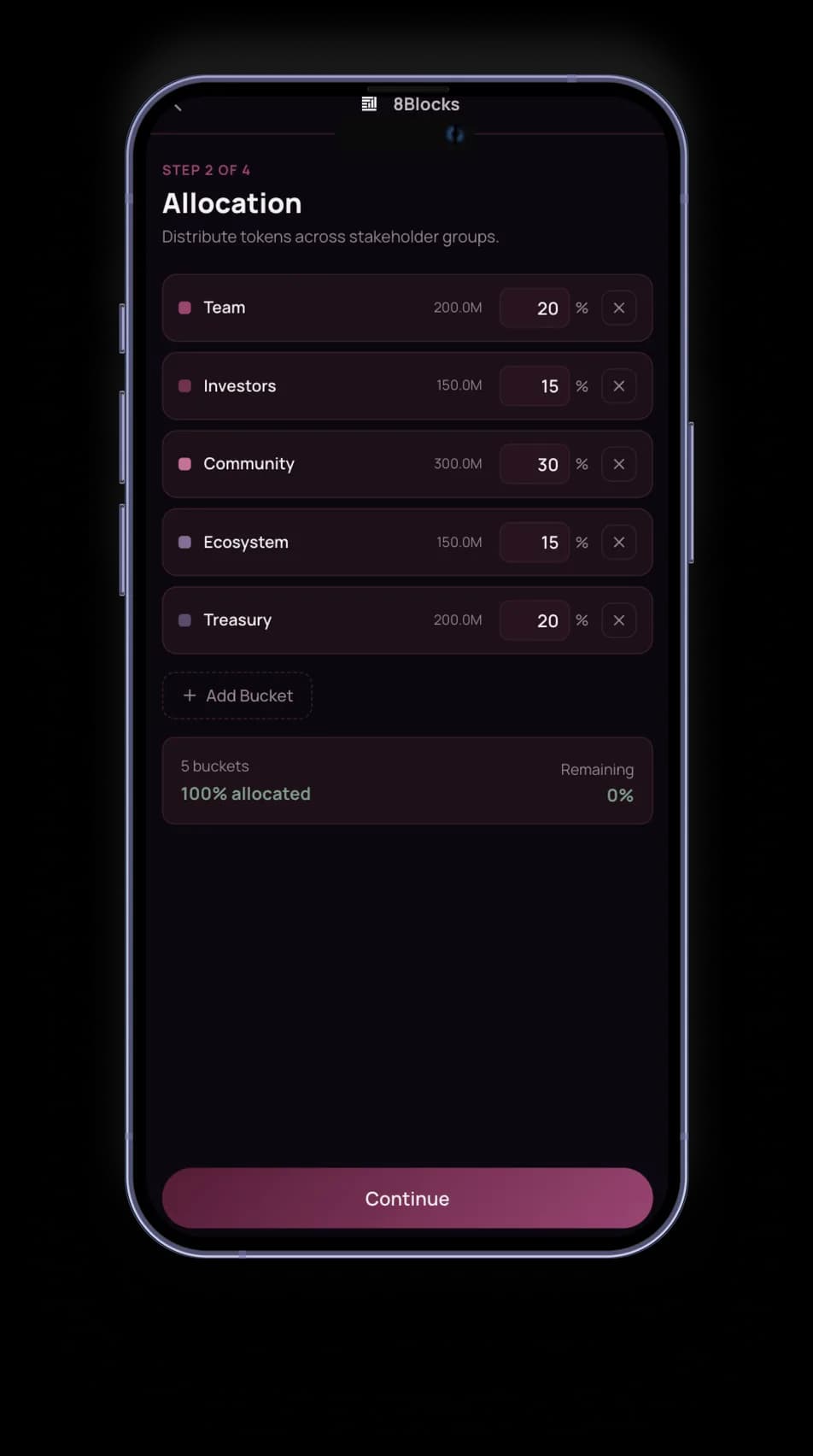
Pressure-test your tokenomics
In our mini app, you can quickly build a basic model, set up vesting, review unlock schedules, and spot the first risks in your tokenomics.
Enter token supply, price, circulating supply, and allocations to get a quick read on the overall structure of your tokenomics
Before launch, it’s better to hear the hard truth from experts
Than to hear it later from investors and the market
The questions owners ask us first.
- Because a finished tokenomics model can still fail in real conditions. An audit helps you verify whether the logic is strong enough before the token sale, investor conversations, and market pressure expose weak spots.