The Downfall of the Personal Token: Why They’re Bound to Grind Investors’ Gears in 2026
In 2025, celebrities launched personal tokens accompanied by massive hype campaigns. In practice, these coins have enriched the creators but soon collapsed when the illusion of their promised utility faded. Investors are now keen that celebrity personal coins are set up to fail. Especially following the broader November 2026 crypto crash, unlike more sustainable expert-created tokens.
As fast-paced as the global economy is nowadays and the tendency for fads to spread like wildfire overnight, there are all sorts of opportunities for people to create wealth, project developers and investors alike. As the ubiquity of digital coins has continued to spread and become more embraced by officials and celebrities, personal tokens feel like a fun area to dabble in, and they’re advertised to serve significant functional purposes.
In these cases, it’s within the creator’s best interest to drum up as much hype as they can, and in 2025, many distinguished individuals declared serious intent to make a serious splash in the crypto world.
Sadly, over the past year, we have seen serious grifting going on with them, where these celebrities have happily collected that money, often engaging in illegal practices, which the government fails to consistently lay the hammer on.
Add in the fact that the crypto market took a dive starting on November 10, 2025, and there are a lot of disgruntled investors who feel cheated and exploited, and are likely to take exception with any future personal coin campaigns going forward.
Personal token scandals
What often starts out appearing as a novel form of monetizing influence is frequently revealed, in actuality, to be designed to prey on audiences.
Timing
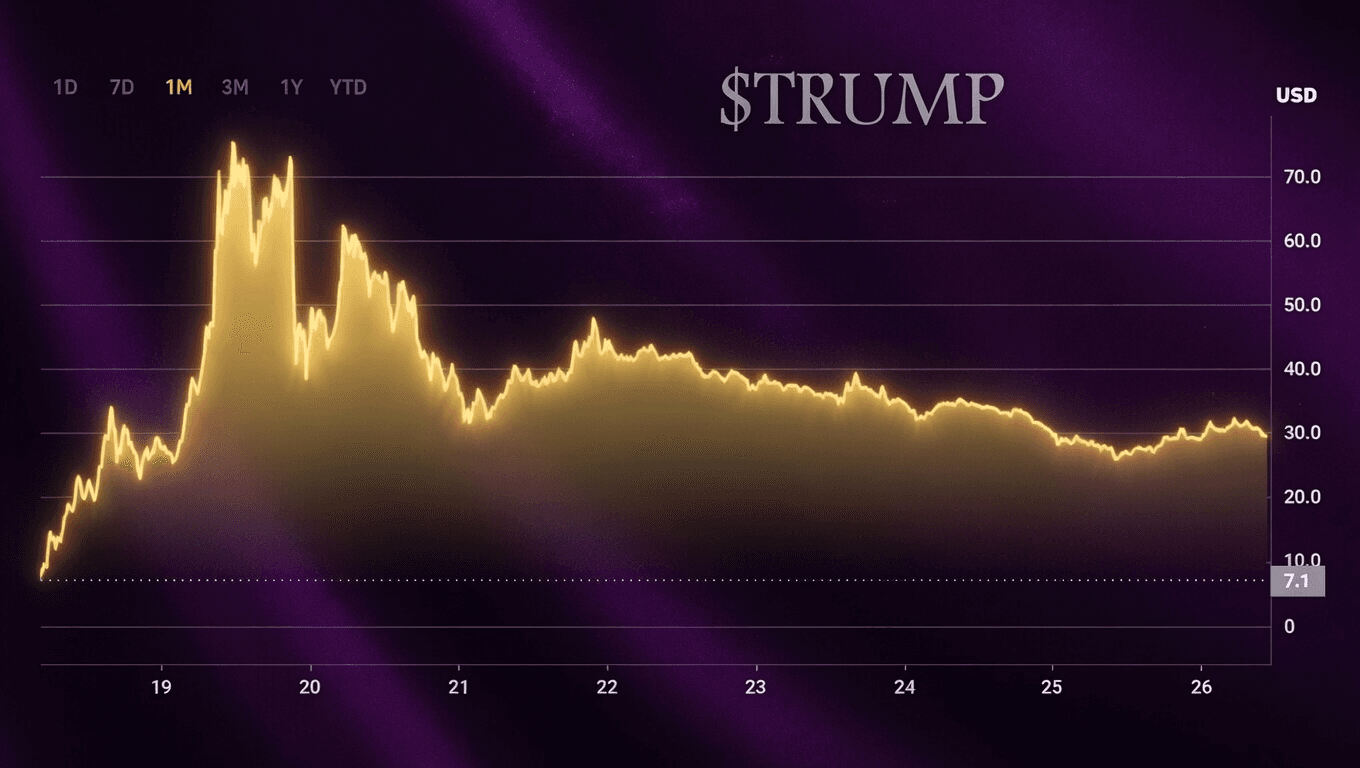
Timing is one of the central facets of personal tokens. There’s no example as demonstrative as this phenomenon as the Trump coin, which was specifically coordinated with the initiation of Donald Trump’s second presidential term. Detractors criticized this as predatory, claiming that the extraction of value was its purpose, not its creation. Forbes estimated that Trump made around $1 billion on this grift.
Insider trading
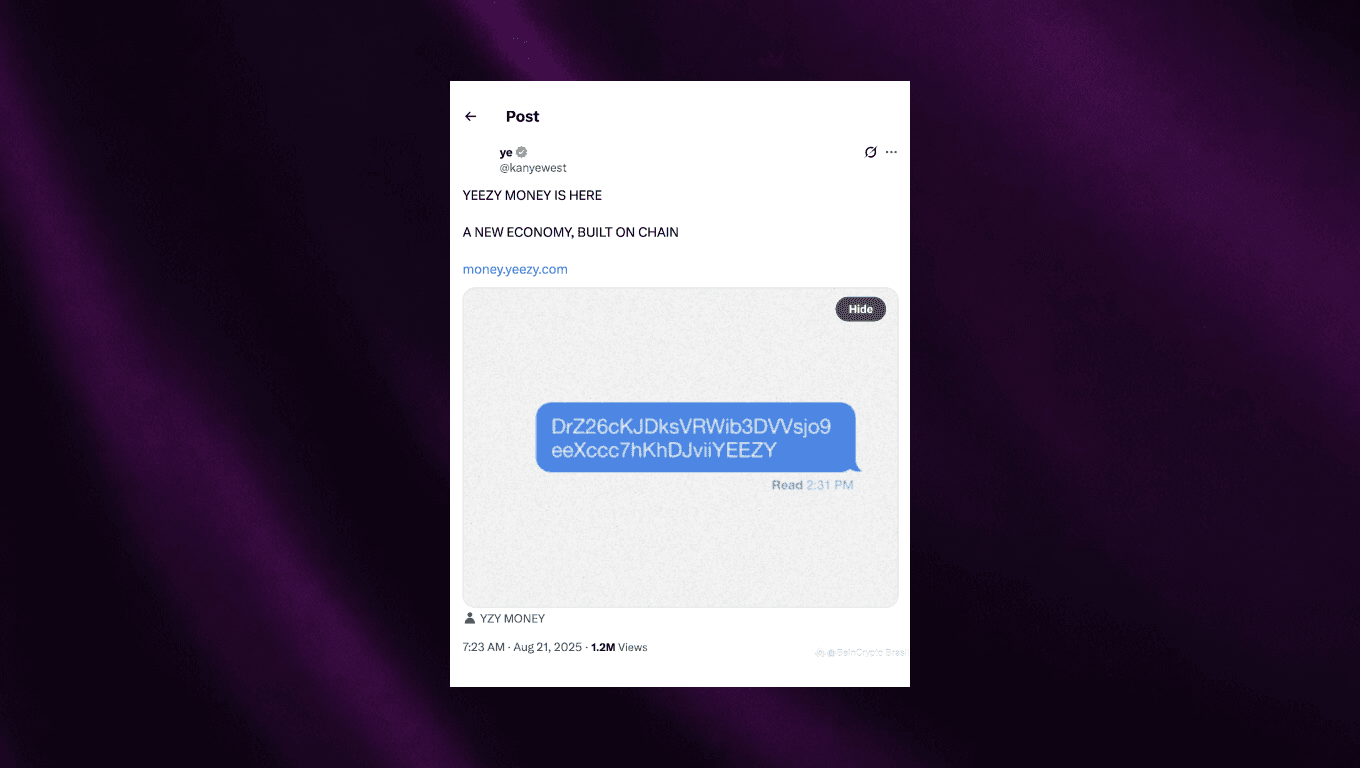
The most egregious example of this issue plaguing personal tokens has been Kanye West’s YZY token, in which case, 94% was found to be initially controlled by insiders, and even as much as 87% actually held in a single multisignature wallet prior to distribution. This has caused accusations that these tokens are much more about opportunistic monetization events than creating legitimate financial instruments.
Just a few of the most hyped-up celebrity-driven tokens that have been used to gift off retail investors have been:
- Joe Biden’s BODEN
- WAP, after Cardi B
- Iggy Azalea’s MOTHER
- MELANIA tokens after the first lady
Promises of utility
The YZY coin, for instance, would not have appeared particularly attractive if it presented itself as a mere meme and object of speculation and creator manipulation. Instead, it needed to appear robust, and thus required a spiel that it was creating a system that would stick around for the long haul.
The claim was that the token was going to help reduce reliance on centralized financial institutions and give users more direct control over payments and transactions. This was supposed to include payment processor Ye Pay and a card for spending both crypto and stablecoins. Eventually, the coin crashed, but by then it had actually built up a market cap of $3 billion.
Logan Paul’s CryptoZoo
One of the most famous YouTubers, Logan Paul, launched a play-to-earn NFT project, which was initially promoted in 2021. It was presented as a game where users could purchase NFT “eggs” that would later hatch into hybrid creatures. Those would then go on to generate rewards within a custom in-game economy. Despite raising millions of dollars through NFT and token sales, the project never did actually manage to muster a functioning product.
How the money grab works
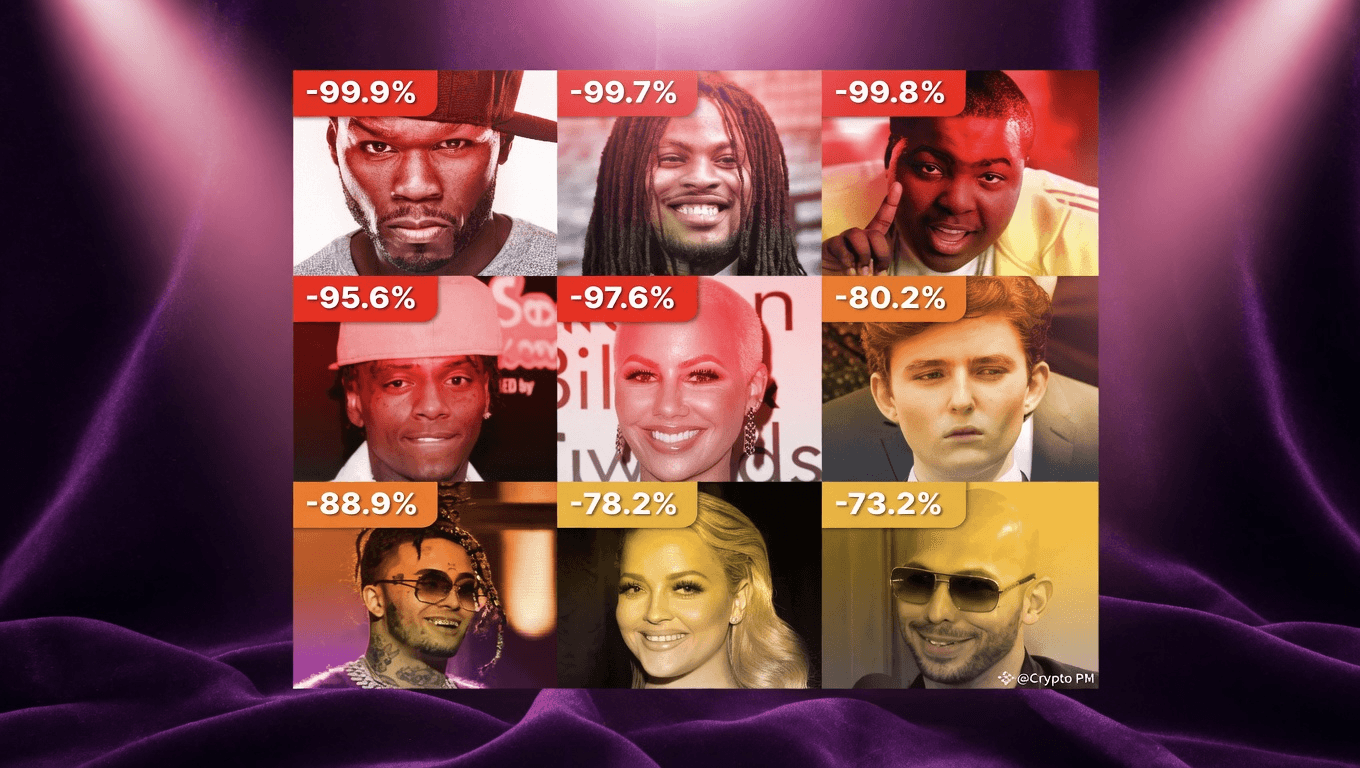
Though all sorts of fresh new narratives are peddled about innovation and community, the lifecycle of most personal tokens follows a highly predictable pattern – one driven far more by timing and profit than by actually creating any practical, real-world value. The average such coin is 94% down from its all-time high. Andrew Tate’s DADDY token is among the best performing of them, among a host of other “best-performing” personal coins, which average a -70% crash, rather than any long-term sustained gain.
The grift goes as follows:
- Launch phase: coordinated with a burst of attention, this tends to include a myriad of announcements by social media influencers and strategic leaks to build anticipation. This always includes big promises of practical ways the token will be used for a long time, thus suggesting stability.
- Rapid price increase: early buyers – often insiders, connected wallets, and those with advance knowledge accumulate tokens at very low prices, hence the attention and price surges.
- Retail investors jump in: perceiving that the asset is going to the moon.
- Early holders exit: the same people who catapulted the surge in demand in the first place start selling off their coins.
- Price collapse: without a fundamental utility or source of economic demand.
Why personal tokens are destined to crash
The only real point of growth for these coins is the temporary attention they receive from hyping. Thus, the growth in their value is only temporary and is tantamount to gambling in a crash game at a casino, where you wait as the reward builds before an eventual “crash”, at which point you lose your entire bet if you failed to exit first. A token cannot sustainably hold value if it is not needed for anything. Once speculation fades, there’s no underlying mechanism to replace it, which is why they eventually crash.
The 2025 turning point: how the personal tokens market has matured
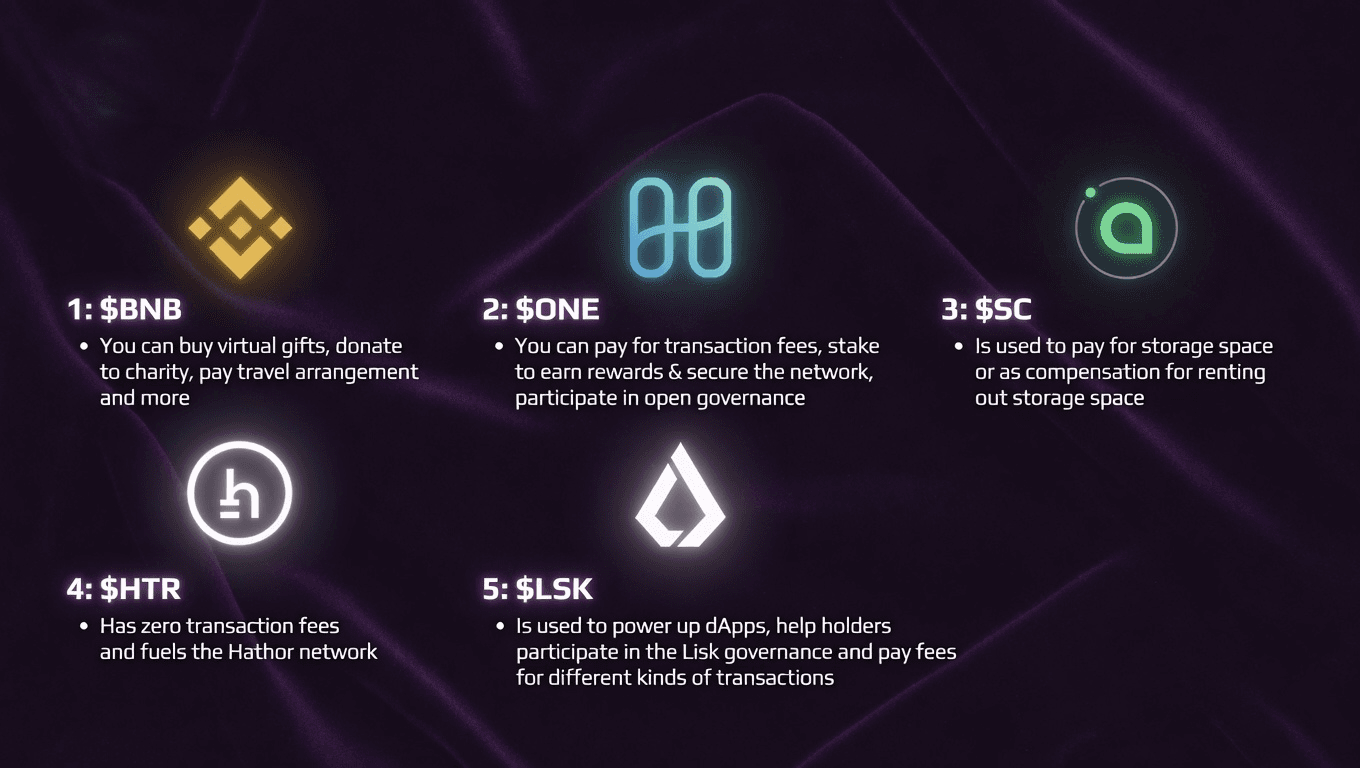
The past year was so full of extreme speculation and overextension, and then on November 10, 2025, the crypto market itself crashed, with the Bitcoin plummeting from $126,000 in November, all the way down to $80,553. Naturally, with the entire digital assets industry contracting, this only served to further dampen enthusiasm for personal tokens. This put a greater investor prioritization on structural fundamentals and sustainability.
This is where the market is now fixated on:
- Real products with actual demonstrated usage: as opposed to just conceptual roadmaps and community narratives;
- A clearly justified, viable revenue model attached to the token;
- Experienced teams with credible execution histories: this excludes individuals who are merely famous but are unlikely and unqualified to personally lead significant technological change;
- Consistent demand.
Conclusion
When they first took off, personal tokens appeared to represent a new, fun way to turn attention into value, but by 2026, the model had largely been exposed as impossible to sustain. Across the launches of upwards of 15 million tokens with a market cap beyond measure, the pattern always remains the same: hype-driven entry, insider advantage, short-lived price spikes, and eventual collapse once attention fades.
Celebrity-based tokens have reinforced concerns about transparency, centralization, and uneven access, and since the 2025 market downturn, investors have firmly pivoted toward projects with real product structure and robust long-term demand.
In that environment, personal tokens now scream distinct manipulation to investors, a complete lack of long-term promise, and foul play by the creators. Any new personal token launched in 2026 will attract extreme scrutiny and accusations of foul play. To even launch one’s own currently would be almost a slight to the countless investors victimized by celebrity grifters.
What matters in the current 2026 is having utility, an ecosystem, a product line, and an experienced team capable of building a business, not just a bunch of noise surrounding a token.
FAQs
What is a personal token?
This is a cryptocurrency launched by an individual to monetize their brand, audience, or ecosystem. These are typically marketed as offering exclusive access, utility, or future value tied to the creator.
What went wrong with most personal tokens?
Most have failed due to a lack of real utility, an overreliance on hype, as well as predatory manipulation. Initial excitement is later followed by crashes.
Are personal tokens inherently scams?
Not all are outright scams, but many exhibit exploitative financial behavior, and long-term stability is quite rare.
What role did the 2025 crypto downturn play?
The broader market crash exposed weak projects. As liquidity dried up and investor sentiment shifted, speculative assets, which had already started to die down, were among the first to take a further hit.
Are celebrity endorsements a reliable indicator of value?
One asset that tends to suggest promise and stability in digital coins and valuables is expertise in and dedication to blockchain or other relevant fields. Celebrities tend to be completely detached from that world, which suggests that, on the contrary, projects they launch will not be long-term nor remain stable.
What’s the long-term outlook for personal tokens?
Unless the model fundamentally changes, personal tokens’ trading value is likely to remain in the cellar. Scrutiny, regulatory pressure, and investor awareness are exerting downward pressure on it.

The 5 Most Common Tokenomics Mistakes and How to Avoid Them
Most tokenomics mistakes happen before launch, while the team still has time to fix them. The problem is rarely one wrong formula. It’s the lack of a system: the token should be part of the business model, not a separate asset attached to the product at the last minute.
What Drives DASH Coin Demand? A Look at Real Utility
Dash is a rare success story as it combines sustainable coin demand with real utility. It demonstrates how hype and incentives fall short. Dash has achieved this via collateral requirements, decentralized infrastructure, data services, and treasury independence.
Tokenomics Audit vs Smart Contract Audit
Two commonly confused types of audits required for crypto token projects are tokenomics audits and smart contract audits. They fulfill completely different purposes but are both completely necessary. Tokenomics audits are economically oriented, smart contracts — technically.