Listing on DEXs: Why Free Exchanges Are the Most Capital-Intensive Story in Web3
The thought of forking over $300,000 to an exchange is pretty daunting. Giving up $300 thousand of your own liquidity in a single day due to an error in the pool is disheartening and scary. In a world of decentralized exchanges, there are no introductory fees, but there is a tax imposed for naivete. And many projects find themselves having to pay it, not upon debuting, but when their schedule turns into a “stairway to hell”. Here is how to avoid falling into that trap and ensure your DEX serves as a springboard, not a financial meat grinder.

Are you ready to list on a DEX?
Hi! I’m Toni Efren, managing partner at 8Blocks. Every Web3 project that plans to issue its own token sooner or later stumbles upon the question: “Where should I launch trading?”
Everyone wants to trade on a CEX. It sounds wonderful in announcements, generates trust, opens up access to a large audience, and gives a project an air of having reached a “mature” stage of development.
But when the rubber hits the road, centralized exchanges are time-consuming, expensive, and complex. They require passing verification, preparing documents, demonstrating a community, proving market interest, and meeting the platform’s requirements. For this reason, a lot of projects start out looking in the direction of DEXs instead.
There are two popular beliefs commonly associated with decentralized exchanges:
- DEXs are cheap.
- Projects ought to start out on a DEX and then move up to a CEX.
It seems to make perfect sense. On DEXs, you don’t have to pay the classic listing fee, await exchange approval, and undergo a long negotiation process. But alas, there’s a catch – DEXs aren’t actually free. It’s just that instead of the money going to an exchange, it gets allocated for liquidity instead.
Centralized exchanges: a filter of sorts
They do a lot more than just consider the idea of the project; they also look at the community, user activity, tokenomics, legal structure, volumes, team reputation, and the risks that it comes with..
For instance, Coinbase writes that it doesn’t accept payment in order for projects to list or apply. But that by no means signifies that it’s easy to list on it. Coinbase has a separate verification process: legal, compliance, technical security, business assessment, and other asset evaluation stages. They describe that in greater detail in their asset listing process materials.
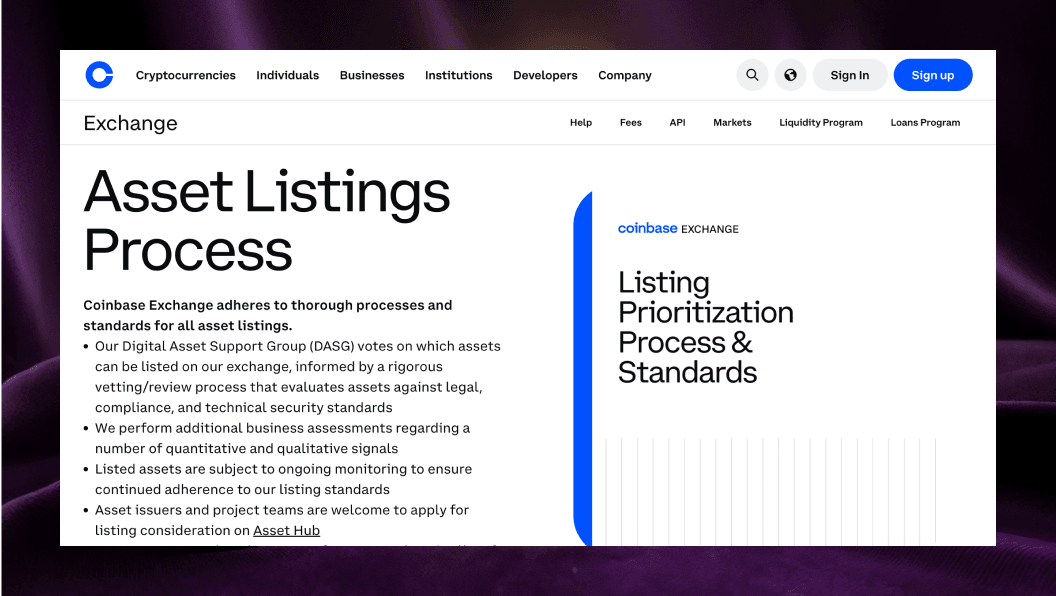
Binance functions in much the same way: first, you submit an application via an official form, and then the exchange evaluates the project using its own internal criteria. In their “How to get your coin listed on Binance.com” guide, they clearly emphasize that direct listing is open for projects whose coin can already circulate on the market.
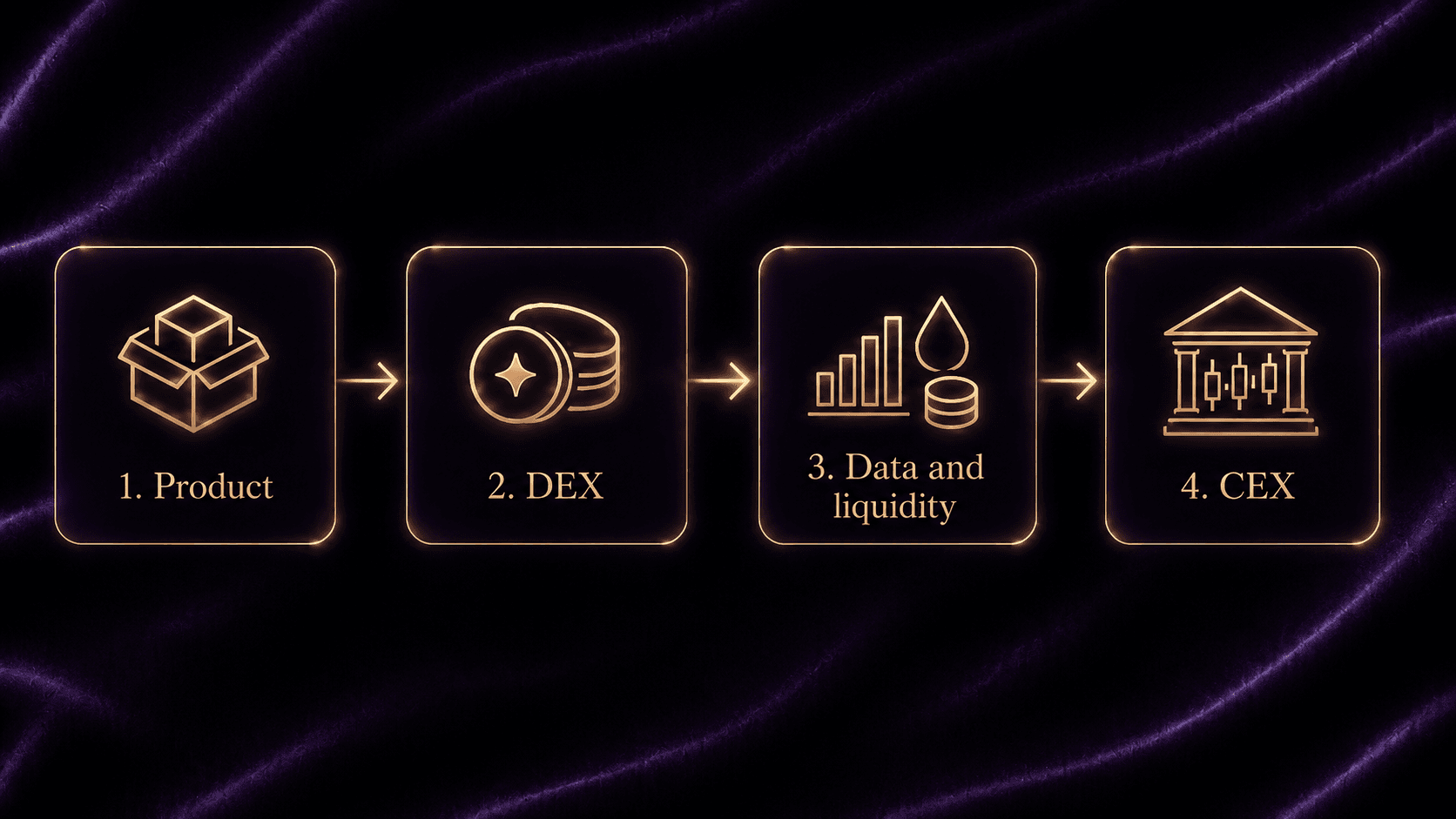
So DEX oftentimes proves to be step one.
A project debuts on a decentralized exchange, creates a liquidity pool, launches trading, exhibits initial volumes, collects demand data, and only then goes to a CEX, not with a bare bones presentation, but with a trading history.
In other words, DEXs aren’t simply “breezier exchanges” but a way to prove to the market and future partners that the token can actually survive the open market.
When the “first DEX, then CEX” strategy works
DEX is not an alternative to CEX but rather a preliminary stage. It’s important to be able to survive on a decentralized exchange first and only at that point attain verification from a large one.
For instance, suppose a project already has a product and users, but lacks a large, public community. Or say it does have a community, but the question arises as to how it will behave after the TGE: whether they will buy, hold, or sell off the tokens right away.
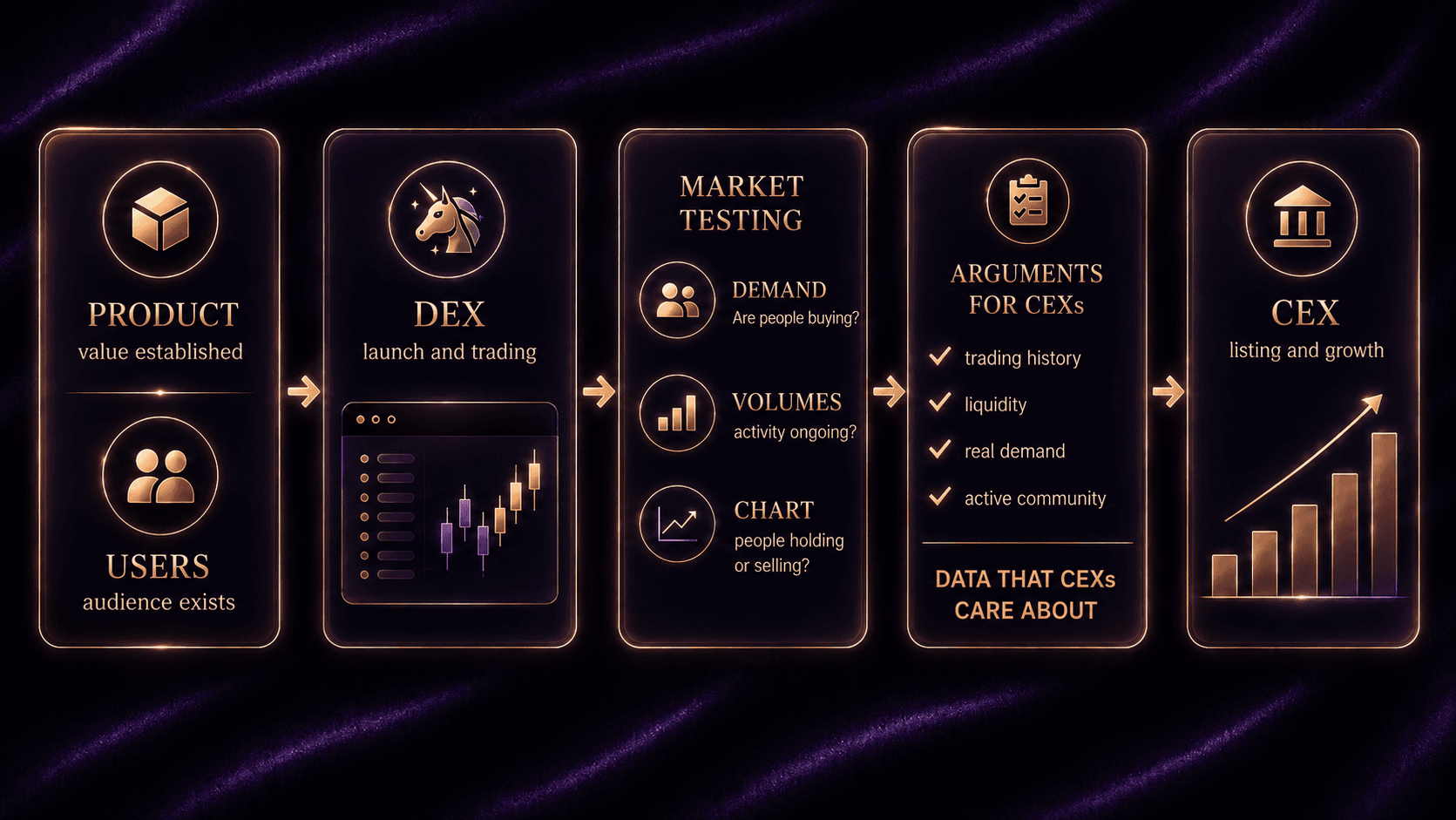
Before listing, you can spend an eternity discussing its utility and road map. But after listing, the market will just look at the chart and ask, “Where’s the money?”
DEX soon begins to expose the difference between promises and reality. At that point, only if a project already has a robust community, ready demand, and a ticket to a CEX, oftentimes, they don’t have to bother with a DEX. An early start without being prepared for volatility often turns the price into a roller coaster that the project hadn’t bargained for.
Are DEXs cheap?
Technically, creating a pair on a DEX is easier than completing the listing process on a CEX. But the main cost of DEX listing isn’t getting the token itself published, but its liquidity.
A DEX doesn’t work like a classical exchange with an order book. The usual system doesn’t exist there, where one user places a purchase order and another – a sale order. Instead, what they do is use an AMM (automated market maker).
Essentially, rather than a user trading with another user, what they use for trading is a liquidity pool.
Uniswap explains that AMM replaces the traditional order book for a liquidity pool – a smart contract with two assets in it. For instance, a project token and USDT. The price changes automatically based on how much of each asset is left in the pool.
Imagine: the project lists a pair. There are 100,000 tokens in the pool and 10,000 USDT. The price is $0.10 per token.
The very first user arrives and sells 10,000 tokens. The pool gives him about 909 USDT. What happens to the pool? There are now 110,000 tokens and– 9,091 stablecoins.
The new price is about $0.083. Just one deal caused the price to fall 17%.
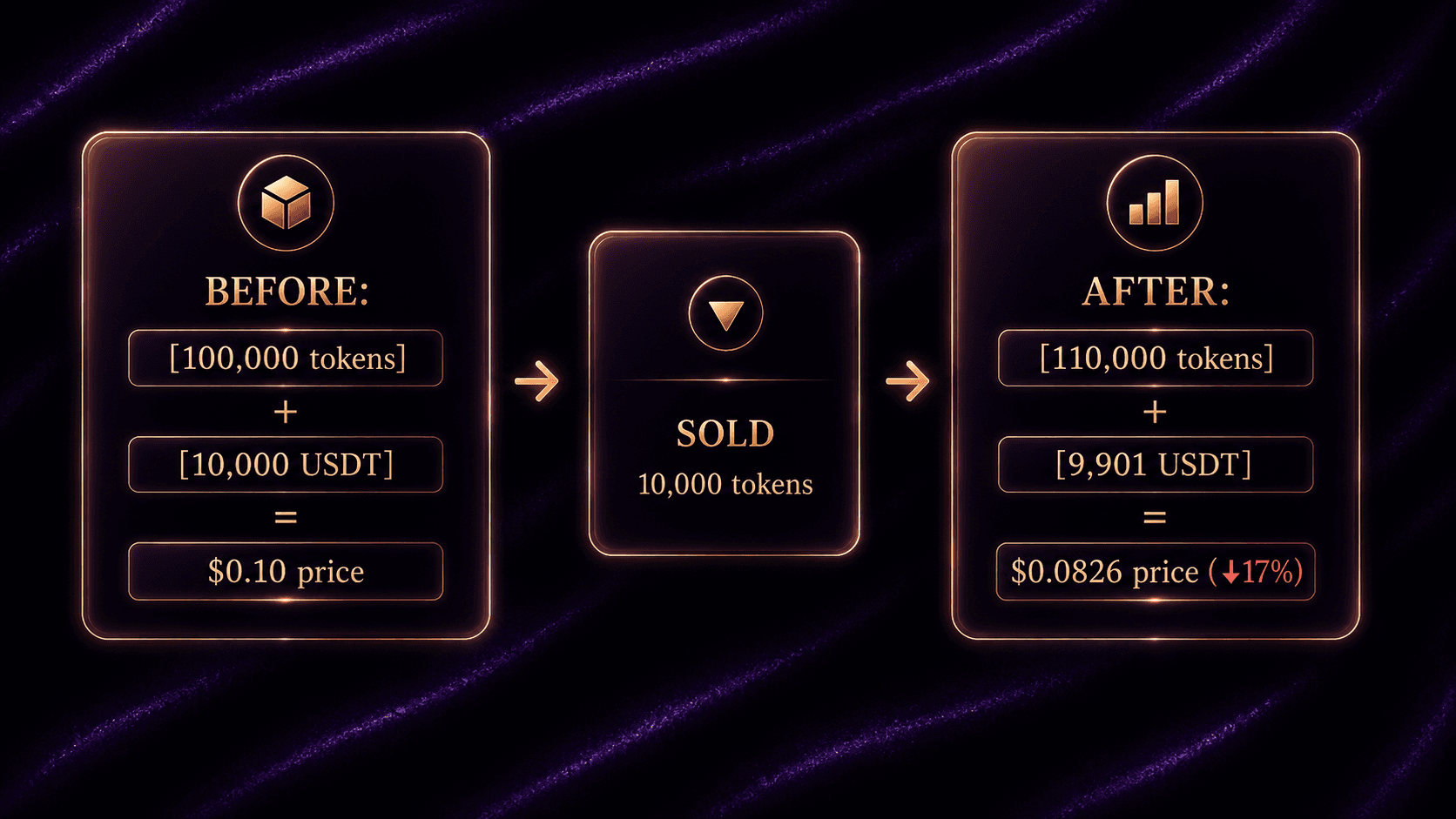
And this is not “market manipulation,” but ordinary AMM math. The less the liquidity in a pool, the more each transaction impacts the price. Binance Academy explains this phenomenon as well in its Uniswap and AMM materials: large pools can process large deals with a lesser price impact.
Most common error: counting just the starting price
Many teams think like this: “We want a starting price of $0,10. So let’s put 100,000 tokens and 10,000 USD, and voila, off we go.”
But no, it’s not that simple. The starting price is just the first point on the chart. In this situation, it’s more important to have a grasp of what’s going to happen an hour, a day, and a week after listing.
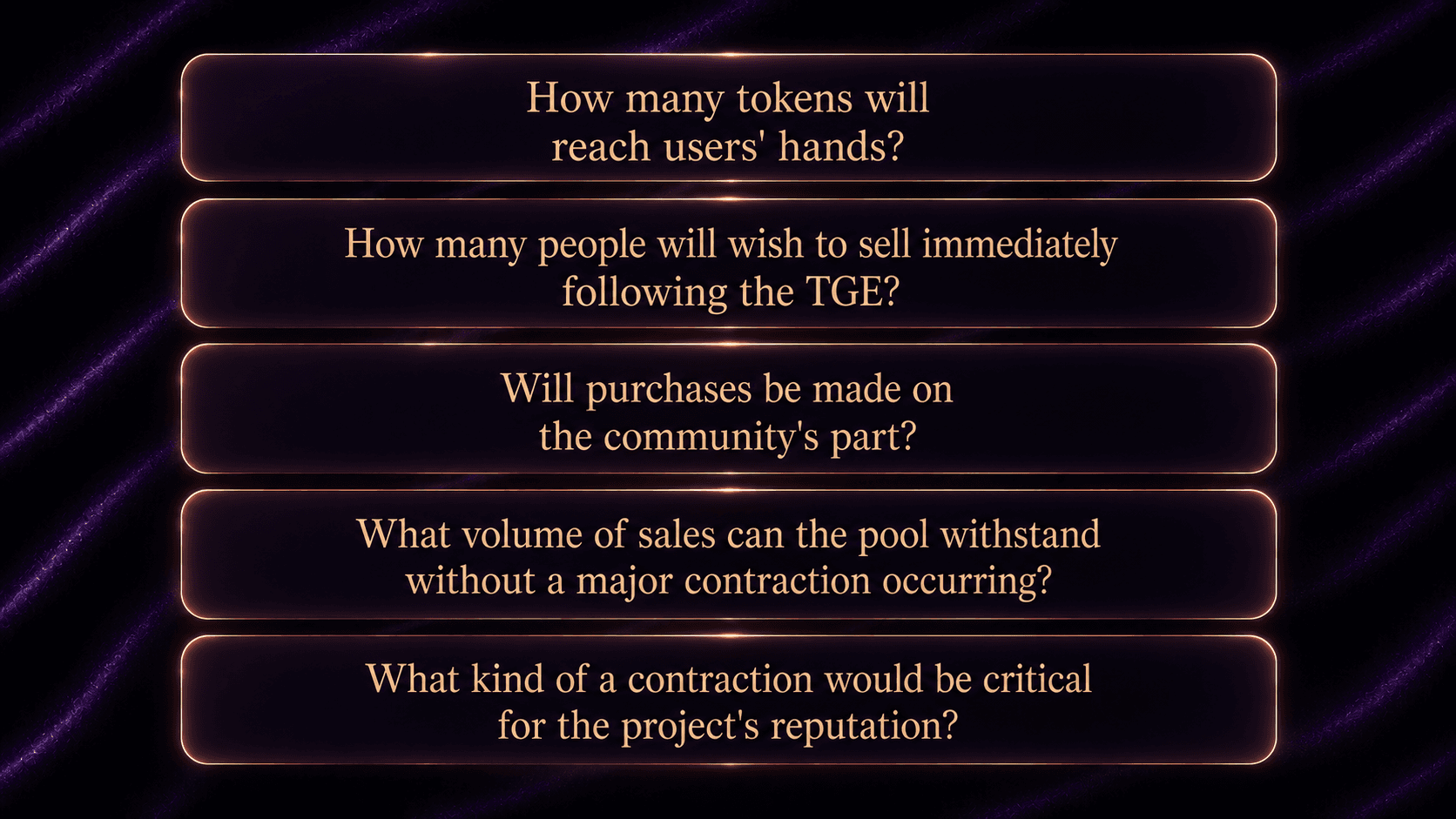
If these issues aren’t accounted for in advance, a DEX listing can turn into a very expensive stress test.
The project seems to have debuted on the market, but the pool turns out to be too small. Several sales move the price down. The chart goes red, and the community starts getting nervous:) New buyers hold out for an even lower price. Early holders start exiting quickly. And beyond that point, it doesn’t matter how good your product is. The market sees the fall and gets reactive.
So, how much liquidity do you need? There is no universal answer
It all depends on the community, FDV, token circulation volume, vesting schedule, anticipated seller pressure, network, selected DEX, and even market conjuncture.
But the following rule nevertheless applies: the more tokens that will potentially be released after the launch, the deeper the pool needs to be.
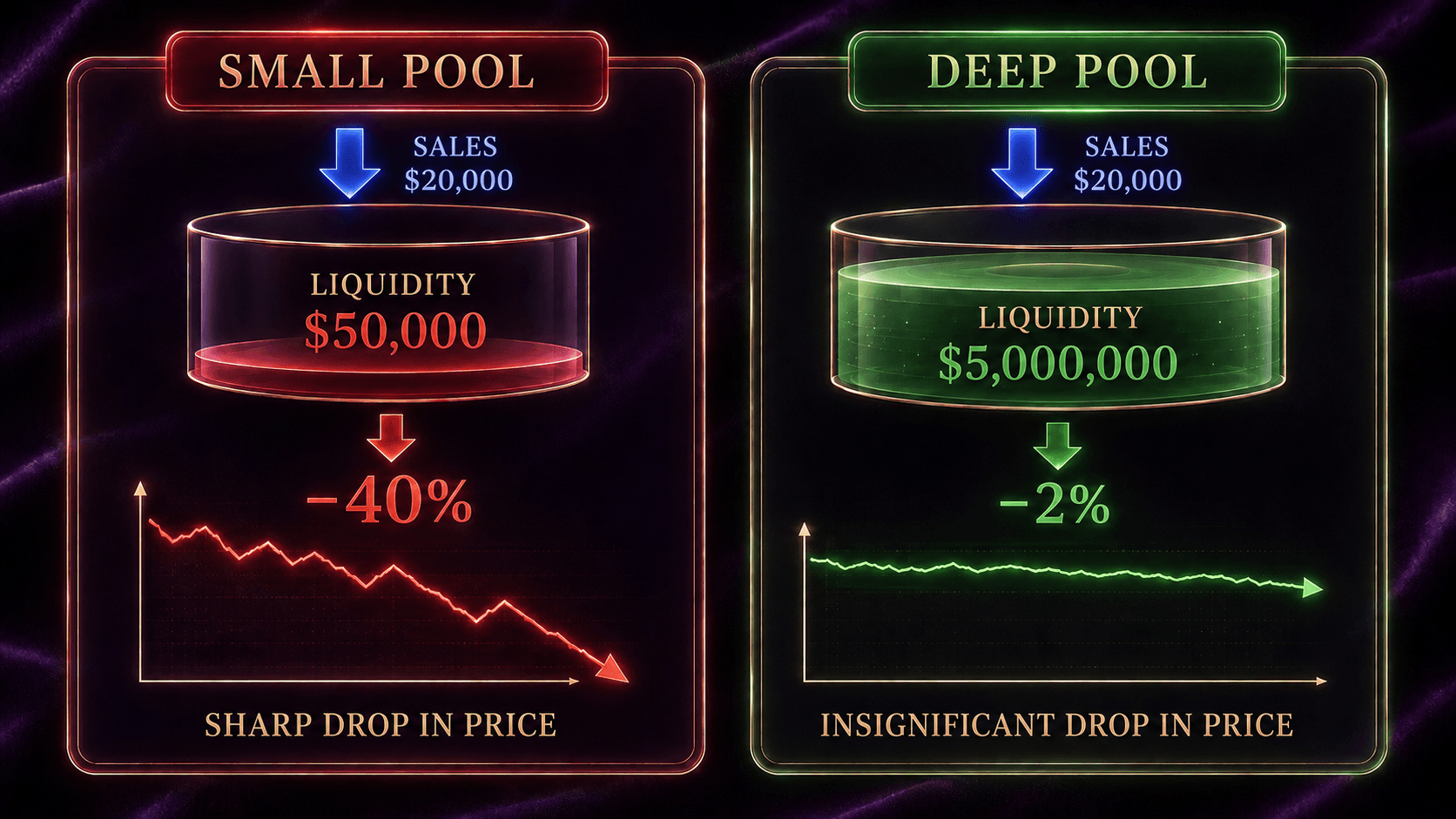
$10,000-30,000 in a pool is a fragile design. It’s fine for a small launch community or a test. But for a serious project with long-term aspirations, it’s practically guaranteed to contract during the very first sales.
So what kind of pool would be considered solid? People often speak in terms of hundreds of thousands of dollars. The range of $300,000 to 700,000+ is not a luxury, but insurance. This liquidity provides a means to smooth out price jumps and endure sales by early investors without destroying the community’s trust during the first hours of trading.
Also, importantly, this money isn’t going to the exchange, but is sitting in the pool. Furthermore, liquidity providers make money on exchanges’ commissions (in Uniswap v3, for instance, the commissions can be 0.05%, 0.30%, or 1%, depending on the pair).
But from the project’s perspective, it’s still real money. It has to be sourced, locked up in a pool, and it demands taking market risk.
How liquidity can leak out of the pool
Picture this most unpleasant scenario. Take a project that has added its own tokens and USDT into a pool, and then, after listing, users start to sell the token off. They give the tokens to the pool and take USDT out of it.
More and more project tokens get put into the pool, and less and less stablecoins remain. The price falls. The sellers get a liquid asset, and the project is left with a chart that continues to look worse and worse.
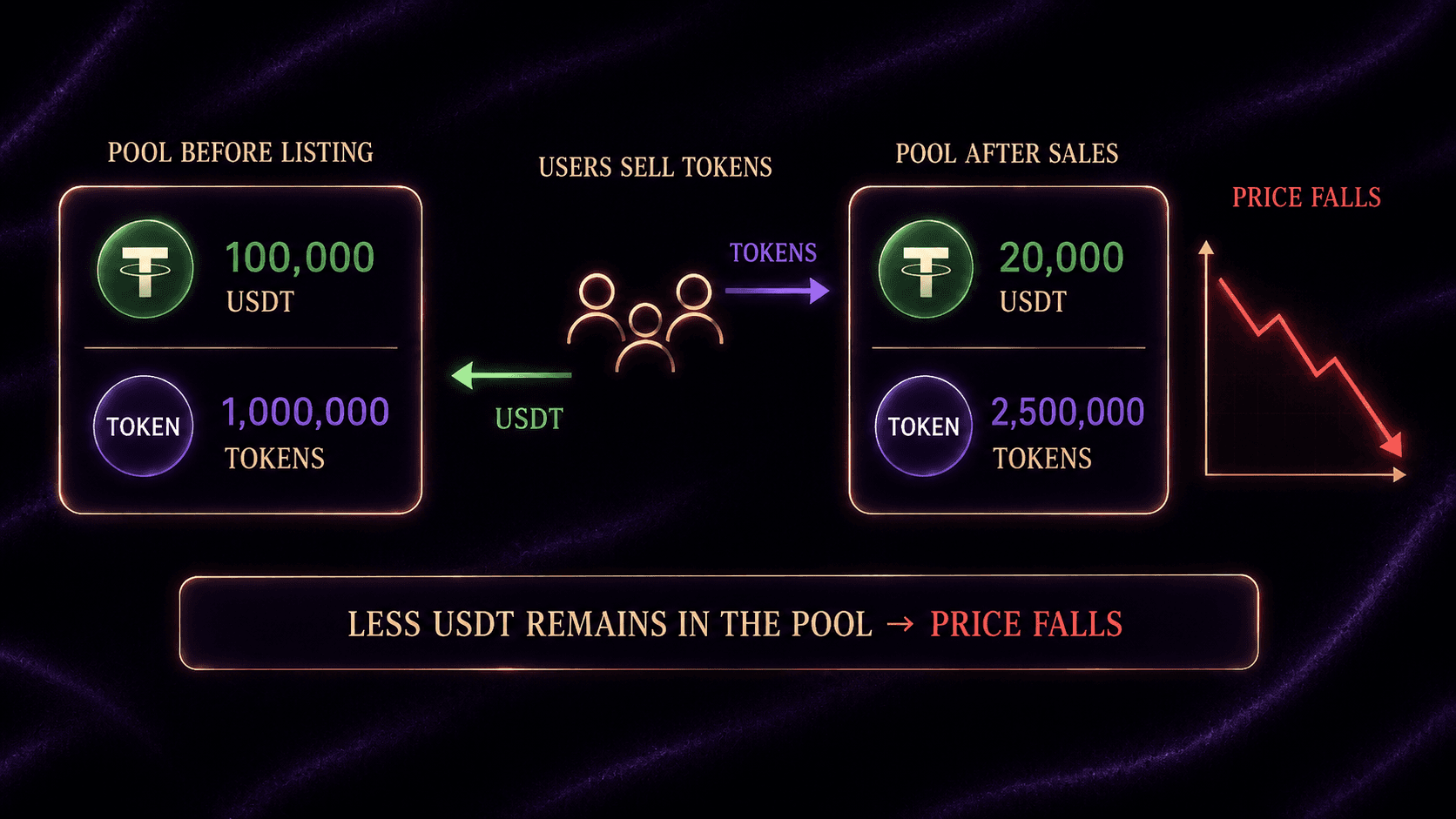
That there is the main risk of DEX listing: if you screw up designing the project, the liquidity will turn into a source of quick bargain sales for the token.
For that reason, before launch, one must calculate not only “how much we’re going to put in the pool”, but “how much the market may withdraw”.
What must be prepared before listing on a DEX
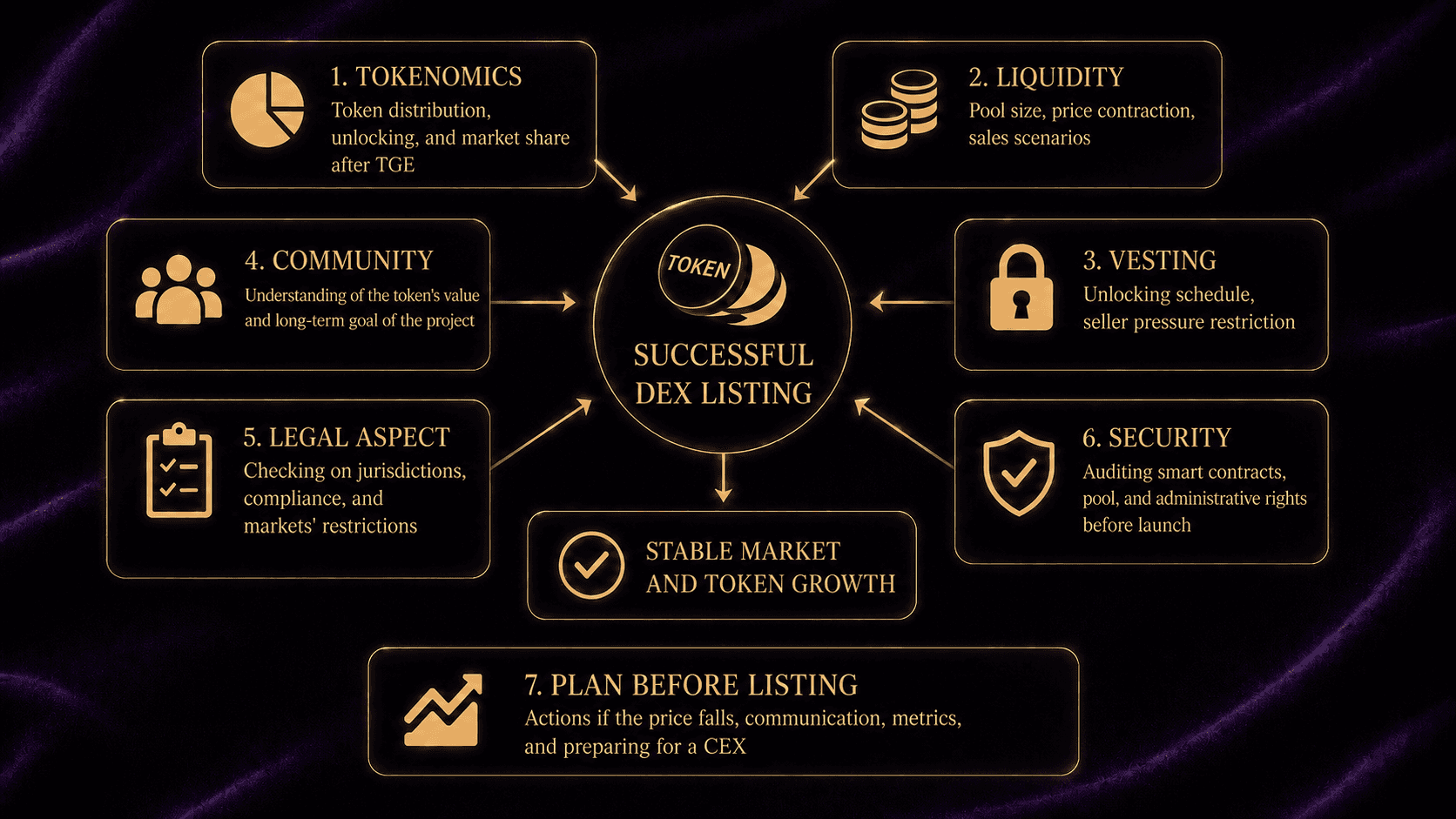
DEX listing is not a “create a pair” button, but a full-fledged market launch around the token. So before debuting on a DEX, you need to prepare its::
- Tokenomics: determine who gets tokens, when they are unlocked, and what portion of the tokens can debut on the market right after the TGE.
- Liquidity: how much funding needs to be put in the pool, how big of a contraction in price the project is prepared to absorb due to large transactions, and what sales scenarios could occur.
- Vesting: If too many tokens are unlocked early, even a very good product can become subject to major pressure from sellers.
- Community: Meanwhile, it must understand what the token is necessary for, its relationship with the product, and why it shouldn’t just be regarded as a quick, speculative asset.
- Legal aspect: The token must be checked from the perspective of jurisdiction, compliance, and restrictions for various markets.
- Security: Smart contracts, pool, distribution mechanics, and administrative rights must be verified before launch, not after the first problem arises.
- Post-listing plan: What will the team do if the price falls? How shall it explain volatility? What data will it keep track of? When will it go to a CEX, and which arguments will it provide to back it?
Not all projects call for debuting on a DEX ASAP
Debuting on a DEX can help a project, but only if the token is already prepared for the open market.
If there is currently no clear utility for a token, traders will perceive it as pure speculation. If it does not have an active community, its price will be swung by random purchases and sales. If it lacks liquidity, the price will fluctuate too acutely even to minor transactions. If the team hasn’t explained to the market in advance what the token is necessary for, any slump will appear as a collapse.
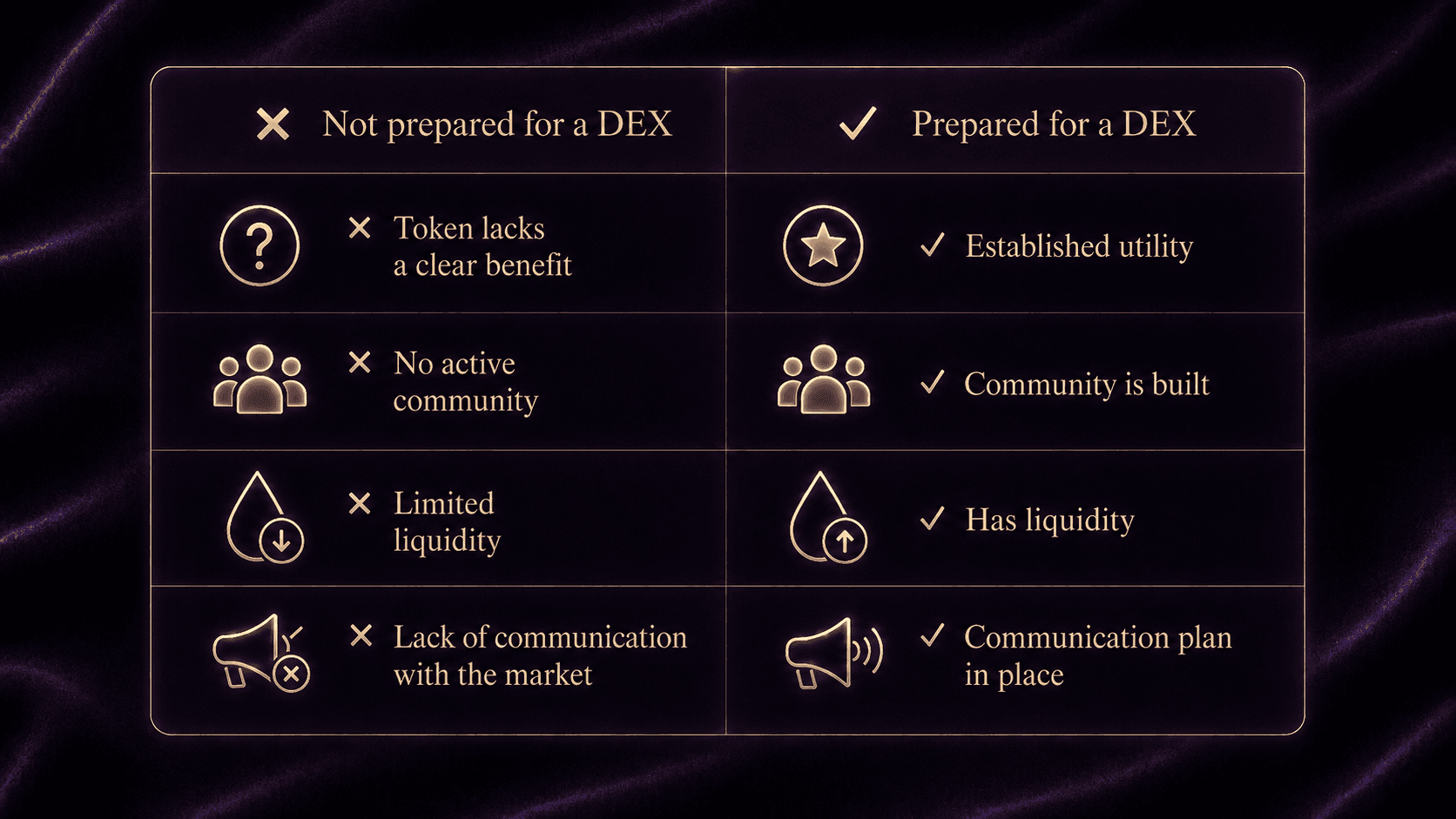
The most dangerous logic is “Let’s list first and then figure it all out later.”
That no longer works with tokens. Errors become public right away: holders, traders, partners, and future exchanges see them right away. And it’s much harder to rebuild trust right after a rocky start than postponing listing and debuting on the market prepared.
When a DEX is the right option
A DEX is justified not for the sake of enjoying an easier process, but as a strategic tool. It’s necessary to feel out the demand, give the early community access to the token, and create a trading history – a “portfolio” of sorts for future CEXs.
But the main case is when the token is already integrated into the product. At that point, speculation is not the objective that listing on a DEX will serve but the economics of the project: users buy it, use it, and create organic demand. In this case, a DEX is not a cheap alternative, but a logically determined stage before moving up to a CEX with confirmed liquidity and data.
Which story will you choose?
A DEX is not just a way to start trading but a point of no return after which a project can no longer be “quietly fine-tuned”. As of that moment, the token becomes a public asset: it gets discussed, compared, sold, bought, and evaluated at this point, not according to the roadmap but the team’s behavior.
So the main question in the lead-up to listing is not “which DEX to debut on,” but which story the project would like to present to the market during the first weeks following its launch.
The story of a chaotic start, where the team takes to putting out fires, explaining away contractions, and attempting to catch up with its own tokenomics? Or the story of a managed debut where the roles you’ve defined for the token, its distribution logic, how you work with holders, and what the subsequent step toward a CEX will be are clear and straightforward?
DEXs can only offer a project a strong advantage if they’re part of a well-calculated strategy, not a formal listing report just to say you’ve done it.
FAQs
Can one debut on a DEX with no money?
Technically, it can. You can create a pair on Uniswap or PancakeSwap practically for free. But “creating a pair” and “launching trading that won’t kill the project” are different things entirely. Without decent liquidity in the pool, even low-level sales can crash the price to a level that the project can never recover from. So it’s not a question of “Can you?” but “Is it a good idea?”
How much money do you need for liquidity?
That depends on the size of the community, the number of tokens in circulation following the TGE, the vesting schedule, and the anticipated pressure from sellers. $10,000-30,000 in a pool would suit an experiment for a small launch. For a project with ambitions and a vibrant community, that usually would range somewhere around $300,000-700,000 or more. It’s not a luxury but a healthy minimum so that the pool doesn’t crash after the first sales are made.
Is the money in a pool an expense or an investment?
It’s not totally one or the other. Money isn’t paid to an exchange but sits in a pool instead and gets put to work. Liquidity providers get commissions off of each exchange. But those are still real funds put under market risk: if users start selling off the token en masse, stablecoins will leak out of the pool, and remain your own tokens at a fallen price.
What will happen if you put only a little bit of liquidity into a pool?
Low liquidity in a pool leads to circumstances under which any transactions will abruptly swing the price. Continuous sales of $500 will cause about 5-8% contractions, scaring the community. Buyers will hold out, anticipating a minimal price to be reached, holders will take losses, and the market will evaluate the project under negative dynamics, even if the product itself is good.
Is it a must to first debut on a DEX and then a CEX afterwards?
No. If a project already has a strong community, confirmed demand, and the ability to debut on a CEX right away, a superfluous intermediary DEX stage will only do harm. An early start without being prepared for volatility is a roller coaster that you never bargained for. A DEX works as a step one when you need to prove to the market that your token is vibrant and assemble a trading history to apply for a CEX in the future.
When is debuting on a DEX the right decision?
When a token has a clear role within a product. For instance, say it's used to pay for functions of a service, to gain access to platform features, or to take part in governance. In that case, users don’t just buy a token for the sake of reselling it, but do so because they really need it. This creates organic demand, smoothes out volatility, and creates just the kind of trading history that CEX exchanges want to see in an application.
What’s the most dangerous thing to look out for when debuting on a DEX?
The “let’s list first and then figure it all out later” mentality. After you’re listed, the price, volumes, contractions, and panicking in the chat go public. It’s much harder to rebuild trust after going up in flames at the start than just postponing the launch for a couple weeks and making sure you’re prepared when you do debut.
Can a situation be fixed if your DEX debut doesn’t go as planned?
You can, but it’s expensive and agonizing. Pouring liquidity into a declining pool means using money to put out a fire. Explaining to the community why the price collapsed 40% in one day is crisis PR that few people are up for. For that reason, it’s much easier and cheaper not to fall into that situation in the first place and plan for seller pressure scenarios in advance, prepare an action plan in the case that a contraction occurs, and debut on the market with a plentiful supply of liquidity, rather than with a minimal amount.
Why HYPE Appears to Be Stronger Than Most DeFi Tokens, and at What Point That Power Could Run Out
HYPE is a good example of the kind of tokenomics that forms when a token doesn’t drift away from the product but rather is built into its economy instead. But beyond that, there’s something more significant this case sheds light on, that being – even a functional model generating substantial revenue and clear demand may remain reliant on specific continued conditions, rather than possessing an absolute margin of safety.

The 5 Most Common Tokenomics Mistakes and How to Avoid Them
Most tokenomics mistakes happen before launch, while the team still has time to fix them. The problem is rarely one wrong formula. It’s the lack of a system: the token should be part of the business model, not a separate asset attached to the product at the last minute.
What Drives DASH Coin Demand? A Look at Real Utility
Dash is a rare success story as it combines sustainable coin demand with real utility. It demonstrates how hype and incentives fall short. Dash has achieved this via collateral requirements, decentralized infrastructure, data services, and treasury independence.